Before the App Remembered You, the Store Did — The Human Side of Customer Loyalty
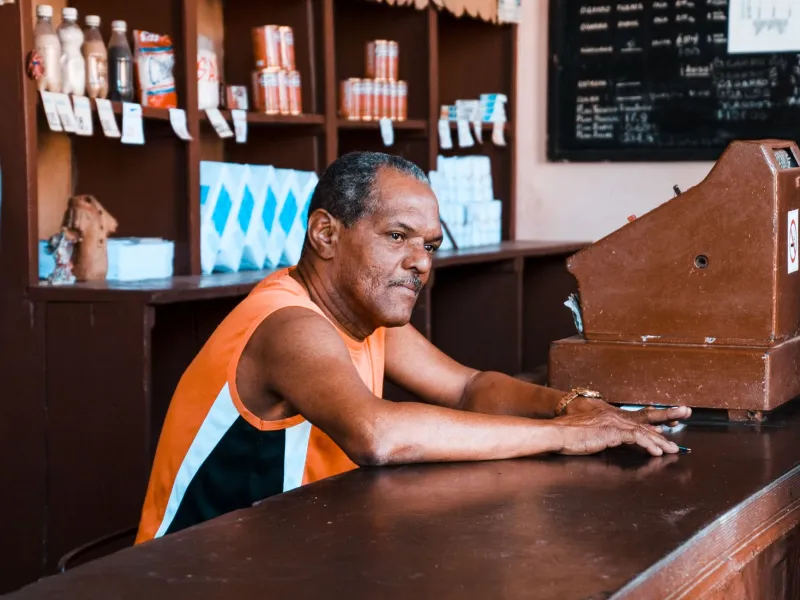
Somewhere between the cash register and the stockroom of nearly every small American retailer in the mid-twentieth century, there was a card file. A simple wooden or metal box, stuffed with index cards, each one representing a customer the owner actually cared about keeping.
Margaret Kowalski, third card from the left. Comes in every Friday. Prefers the darker roast. Daughter just started at the local high school. Birthday in March — remind her about the gift sets the second week of February.
This was not a sophisticated system. It was a human one. And for decades, it was how American retailers built the kind of loyalty that kept customers coming back not because of points or discounts, but because walking into that store felt like being recognized.
The Original Data Collection
The index card system wasn't invented by anyone in particular. It evolved organically out of the same instinct that made a good shopkeeper remember your name — the understanding that people want to feel like more than a transaction.
In hardware stores, pharmacies, dry goods shops, and specialty grocers across the country, owners and their staff kept informal records of the customers who mattered most to the business. Not everyone got a card. The regulars did — the people who came in week after week, whose preferences shaped what the store stocked, whose goodwill was worth cultivating.
The information on those cards was gathered the old-fashioned way: through conversation. A customer mentioned offhand that her husband's birthday was coming up. The owner wrote it down. Someone asked for a specific brand that wasn't in stock. The card got a note. Over time, the card became a kind of portrait — not a data profile, but a human sketch.
When that customer walked through the door, the owner or a trusted employee could glance at the card before going to the floor and greet her with something specific. Not "Welcome back" — but "Did your husband end up liking those cigars?" The effect was powerful precisely because it felt effortless. It felt like being remembered rather than being tracked.
What Loyalty Actually Meant
The relationship between a small retailer and a regular customer in mid-century America looked a lot more like a friendship than a business arrangement — at least from the customer's side of it.
You had your hardware store. Your butcher. Your pharmacy. Your dress shop. These weren't interchangeable options in a competitive market. They were places where you had history, where the people behind the counter knew your situation, where a request for something unusual was met with genuine effort rather than a blank stare.
In return, customers were loyal in ways that had real economic meaning. They didn't comparison shop. They didn't drive across town for a marginally better deal. They sent their friends and their grown children to the same stores. When a business they trusted had a slow month, they spent a little more than they needed to. The relationship had value on both sides, and both sides understood that.
This wasn't naivety. It was a rational response to a world where trust was the primary currency of commerce, and where that trust had to be earned and maintained through personal attention.
When the System Started to Scale
The shift away from this model didn't happen because anyone decided personal attention was a bad idea. It happened because scale made it impossible.
As chain stores expanded through the 1950s and 60s, the economics of retail changed. A store with fifty locations couldn't run on index cards and owner memory. Standardization became the competitive advantage — consistent pricing, consistent inventory, consistent experience across every location. The individual customer relationship was sacrificed for efficiency.
The first formal loyalty programs emerged from this tension. Trading stamps, punch cards, frequent buyer clubs — these were early attempts to replicate the feeling of being a valued regular without requiring the personal knowledge that had originally created that feeling. They worked, to a degree. But they worked by substituting a transactional incentive for a relational one. You came back for the stamps, not because someone remembered your daughter's name.
Digital loyalty programs are the direct descendants of those punch cards, scaled to a level the original shopkeepers couldn't have imagined. Your grocery store app knows exactly what you buy, how often you buy it, what promotions change your behavior, and how price-sensitive you are for specific product categories. It knows more about your purchasing habits than any index card ever could.
The Feeling That Got Lost in the Data
Here's the strange part: modern loyalty programs are technically far more sophisticated than anything an index card could support, and yet most people don't feel more valued by them. They feel tracked.
The distinction matters. Being remembered by a person who chose to pay attention to you is a fundamentally different experience from being profiled by an algorithm that does it automatically to everyone. One feels like care. The other feels like surveillance dressed up in reward points.
There's a reason that when a small business owner remembers your usual order without being reminded, it still creates a disproportionate feeling of goodwill. The gesture is small. The effect is outsized. Because it signals something the app can never convincingly signal: that someone noticed you specifically and thought you were worth remembering.
What the Card File Understood That the Algorithm Doesn't
The index card system was inefficient, inconsistent, and completely unscalable. It depended entirely on the memory and attention of individual human beings, which meant it varied wildly from store to store and owner to owner.
But it understood something about customer relationships that modern retail has largely forgotten: the goal was never to retain the customer's spending. It was to retain the customer's trust. The spending followed naturally from that.
Today, loyalty programs are explicitly designed to change purchasing behavior through incentives. They're effective marketing tools. But they're not relationships. They're systems that simulate the feeling of being valued while actually treating every customer as a statistical pattern to be optimized.
The shopper who walked into a store in 1955 and was greeted by name, asked about her family, and told that the fabric she'd been waiting for had just come in — she was experiencing something that no points balance has ever quite replicated.
Some things got bigger. Some things got smarter. And some things just got replaced by something that works differently, for different reasons, and doesn't feel quite the same.