America's First Entrepreneurs Were Twelve — When Kids Ran the Morning News
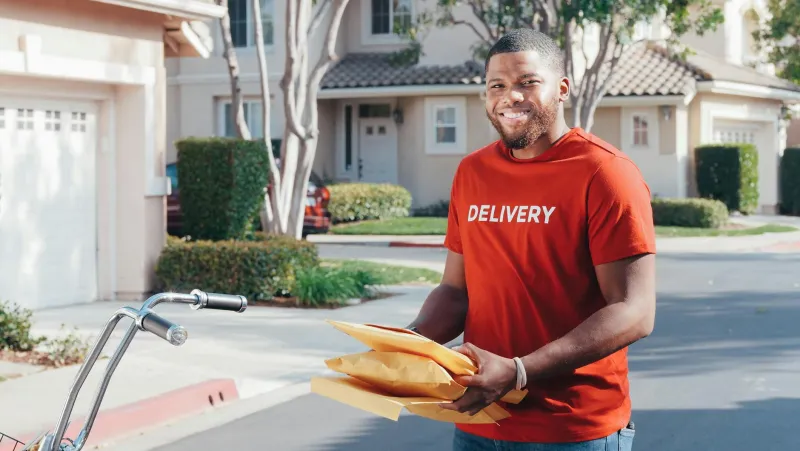
Dawn Patrol
Five-thirty AM, suburban America, 1975. While most of the neighborhood slept, twelve-year-old Tommy Martinez was already loading his bike with the morning edition, checking his route sheet, and mentally calculating which customers still owed money from last month. By the time most kids his age were eating cereal, Tommy had already run a small business for two hours.
 Photo: suburban America, via static5.depositphotos.com
 Photo: Tommy Martinez, via www.tvinsider.com
This wasn't child labor. This was childhood entrepreneurship — and for generations of American kids, the paper route served as their first real job, their introduction to responsibility, and their earliest lesson in how the working world actually operated.
More Than Just Throwing Papers
Today's adults who remember paper routes often describe them as simple: wake up early, deliver newspapers, collect allowance. But the reality was far more complex. Paper carriers weren't just delivery kids — they were small business operators managing every aspect of a mini-enterprise.
They maintained customer databases (handwritten in composition notebooks), tracked accounts receivable, handled customer service complaints, managed inventory, and dealt with seasonal fluctuations in demand. They learned to read people, negotiate payment plans, and handle the uncomfortable conversations that come with collecting overdue bills.
Consider the skills involved: route planning for maximum efficiency, weather contingency planning (what to do when it rained), customer relationship management (knowing which houses wanted papers placed exactly where), and basic accounting (keeping track of who paid what, when).
The Economics of Childhood
A typical paper route in the 1970s might include 75-100 customers, generating $40-60 per month for the carrier — real money for a kid, equivalent to about $200-300 today. But earning that money required genuine business acumen.
Paper carriers had to purchase their newspapers from the distributor (usually around 60% of the cover price), meaning they were investing their own money before seeing any profit. They bore the financial risk: if customers didn't pay, carriers still owed the newspaper company. If papers were stolen or damaged, carriers absorbed the loss.
This created powerful incentives for good business practices. Carriers learned to diversify their customer base, maintain good relationships with reliable payers, and develop collection strategies for slow-paying accounts. They experienced firsthand how cash flow problems could affect their income.
Customer Service at Age Thirteen
Paper routes taught kids how to handle difficult customers with a maturity that would impress modern business schools. When Mrs. Peterson complained that her paper was consistently delivered too late, carriers had to problem-solve: adjust their route timing, negotiate expectations, or find creative solutions.
 Photo: Mrs. Peterson, via bhsnews.org
They learned to read social cues, understanding which customers preferred minimal interaction and which enjoyed brief conversations. They discovered how small gestures — like placing papers in plastic bags during rain, or ensuring newspapers landed on porches rather than in bushes — could build customer loyalty and lead to better tips.
During collection time (usually monthly), carriers knocked on doors, made change, handled complaints, and sometimes negotiated payment plans with customers experiencing financial difficulties. These interactions taught empathy, persistence, and professional communication skills.
The Weather Report on Character
Paper routes operated regardless of weather conditions. Snow, rain, ice storms — the papers still needed delivery. This wasn't optional; customers depended on their morning news, and carriers who failed to deliver faced immediate consequences: cancelled subscriptions and lost income.
These weather challenges taught kids about commitment and reliability in ways that modern structured activities rarely match. When a thirteen-year-old trudged through a blizzard to ensure customers received their newspapers, they learned lessons about responsibility that lasted a lifetime.
What Replaced the Route
Today's newspaper delivery is handled primarily by adults driving cars, throwing bundled papers from vehicle windows onto driveways. The personal relationship between carrier and customer has disappeared, replaced by efficient but impersonal distribution systems.
Meanwhile, modern children's introduction to work often comes through highly structured, adult-supervised activities: organized sports leagues, formal volunteer programs, or family businesses where parents maintain significant oversight. The independent operation of a paper route — where kids succeeded or failed based entirely on their own efforts — has largely vanished.
The Gig Economy's Distant Cousin
Interestingly, today's gig economy shares some similarities with the old paper route model: independent contractors, direct customer relationships, and income tied to personal effort and customer satisfaction. But there's a crucial difference — modern gig workers are adults, while paper carriers were children learning these concepts for the first time.
The paper route provided a safe environment for kids to experience business failure without catastrophic consequences. If they lost customers due to poor service, the worst outcome was reduced allowance money. This low-stakes environment allowed for genuine learning through trial and error.
Lessons That Lasted
Adults who had paper routes often credit the experience with teaching them fundamental life skills: time management, customer service, financial responsibility, and work ethic. They learned that income required effort, that customer satisfaction drove business success, and that reliability was non-negotiable.
These weren't abstract lessons taught in classrooms, but practical skills developed through daily experience. The paper route served as a bridge between childhood's protected environment and adulthood's responsibilities.
The Route Not Taken
The disappearance of paper routes represents more than just changing newspaper economics. It reflects broader shifts in how we view childhood, work, and learning. Modern parents often prioritize academic achievement and organized activities over practical work experience, believing that structured education provides better preparation for adult success.
But something valuable was lost when we professionalized newspaper delivery and eliminated this particular pathway for childhood entrepreneurship. The paper route offered lessons that couldn't be replicated in classrooms or organized sports: the direct connection between effort and reward, the importance of customer relationships, and the satisfaction of running something entirely on your own.
In our efforts to optimize childhood for future success, we may have inadvertently eliminated one of the most effective training grounds for the entrepreneurial skills that drive American innovation. The twelve-year-old who once managed 100 customers while riding a bike through suburbia learned lessons about business, responsibility, and self-reliance that no amount of structured programming could replicate.