The Neighborhood Chemist Who Knew Your Ailments by Heart — When Medicine Was Made Just for You
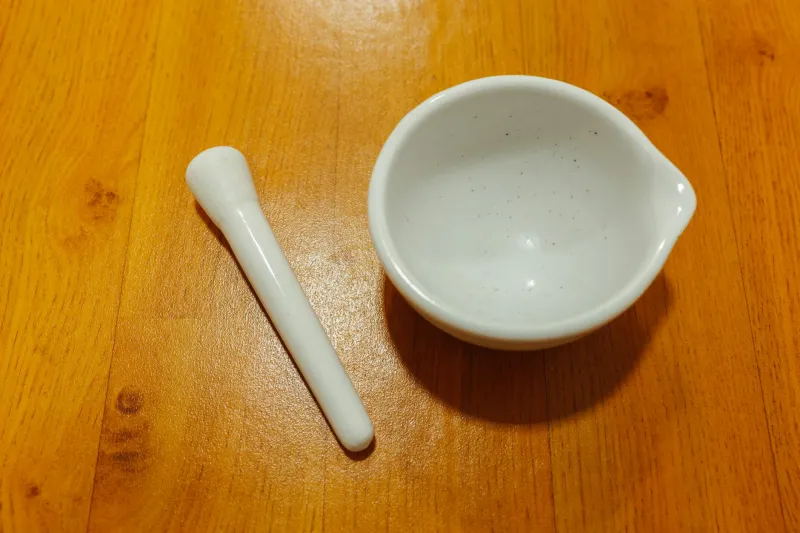
The Mortar and Pestle on Every Counter
Walk into any pharmacy today, and you'll see rows of identical bottles, uniform pills, and automated dispensing machines that count out your medication with mechanical precision. But step back sixty years, and you'd find something entirely different: a pharmacist in a white coat, sleeves rolled up, grinding powders in a marble mortar, measuring liquids with graduated cylinders, and creating your medicine from raw ingredients.
This wasn't just old-fashioned charm. It was how medicine worked.
When Every Prescription Was a Recipe
In the 1950s and early 1960s, most medications didn't exist as mass-produced tablets or capsules. Instead, doctors wrote prescriptions that read more like cooking recipes than modern drug orders. "Take two grains of aspirin powder, mix with lactose, add a binding agent, and form into capsules for Mrs. Johnson's arthritis."
Pharmacists weren't just dispensers — they were chemists in the truest sense. They maintained extensive knowledge of drug interactions, proper dosing for different body weights and ages, and how to modify formulations for patients with specific allergies or sensitivities. Every prescription required actual pharmaceutical skill.
Consider this: in 1955, a pharmacist might spend twenty minutes preparing a single prescription, carefully weighing ingredients on a balance scale accurate to milligrams, mixing compounds by hand, and often creating custom dosage forms that simply didn't exist in pre-made versions.
The Lost Art of Pharmaceutical Relationships
Your neighborhood pharmacist knew things about you that your own family didn't. They tracked your medical history not through computer databases, but through handwritten records and personal memory. They knew that Mr. Peterson couldn't swallow large pills, so they'd crush his heart medication and mix it into a flavored syrup. They remembered that little Sally was allergic to red dye, so they'd use alternative coloring in her antibiotics.
This personal knowledge extended beyond medical needs. Pharmacists often served as informal healthcare advisors, counseling customers on everything from choosing the right cough syrup to understanding how their diabetes medication worked. They were trusted community figures who bridged the gap between doctors and patients.
What Compounding Actually Looked Like
The compounding pharmacy of yesteryear was a fascinating place. Behind the counter, you'd find shelves lined with glass jars containing raw powdered drugs, liquid extracts, and chemical compounds. Pharmacists maintained detailed reference books — thick volumes that explained how to combine ingredients, what concentrations to use, and how different substances interacted.
They prepared everything from custom-strength pain relievers to specialized ointments for skin conditions. Hormonal treatments were individually mixed based on doctor specifications. Even simple things like cough syrups were often prepared fresh, with pharmacists adjusting sweetness levels and flavoring based on patient preference.
The equipment was impressive too: precision scales, pill-making machines, ointment slabs for mixing creams, and specialized glassware for liquid preparations. Each pharmacy was essentially a small-scale pharmaceutical manufacturing facility.
The Standardization Revolution
The shift toward mass-produced medications began in the 1960s and accelerated through the following decades. Pharmaceutical companies discovered they could produce consistent, cost-effective medications in large batches, eliminating the need for individual compounding in most cases.
This change brought undeniable benefits: lower costs, consistent dosing, improved quality control, and faster service. A prescription that once took twenty minutes to prepare could now be filled in two minutes by counting pre-made tablets.
But something was lost in the translation.
What Modern Medicine Gained and Lost
Today's pharmacy system is remarkably efficient. Automated dispensing systems reduce human error, standardized medications ensure consistent quality, and computer databases track interactions and allergies with precision that human memory couldn't match.
Yet patients often describe feeling disconnected from their pharmacy experience. The pharmacist who once knew your name and medical history has been replaced by rotating staff who read your information from a screen. The personal touch — adjusting medication flavors, creating custom dosage forms, or spending time explaining how treatments work — has largely disappeared.
The Survivors
Compounding pharmacies still exist, though they represent less than 3% of all pharmacies today. They serve specialized needs: custom hormone preparations, medications for patients with unusual allergies, veterinary compounds, and pediatric formulations that require specific dosing or flavoring.
These modern compounding pharmacies operate under much stricter regulations than their predecessors, with sterile preparation areas and extensive documentation requirements. They represent a bridge between the personalized medicine of the past and the standardized efficiency of the present.
The Prescription for Nostalgia
The neighborhood chemist who knew your ailments by heart represents more than just a different way of filling prescriptions. They embodied a time when healthcare was inherently personal, when expertise came with relationships, and when medicine was literally made to order.
While we've gained efficiency, consistency, and cost savings through standardization, we've lost something harder to quantify: the sense that our healthcare was crafted specifically for us by someone who knew our story. In our rush toward pharmaceutical efficiency, we traded the mortar and pestle for the counting machine — and perhaps lost a little bit of medicine's soul in the process.