Everyone Was Listening — The Era When a Phone Call Belonged to the Whole Street
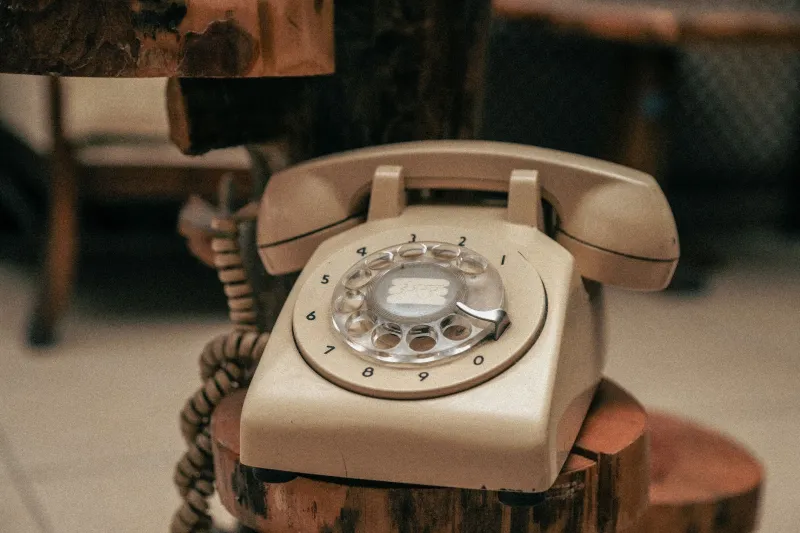
Imagine picking up the phone to call your sister and hearing two of your neighbors already mid-conversation about the Hendersons down the block. You could wait. Or you could listen. Most people, at least occasionally, did both.
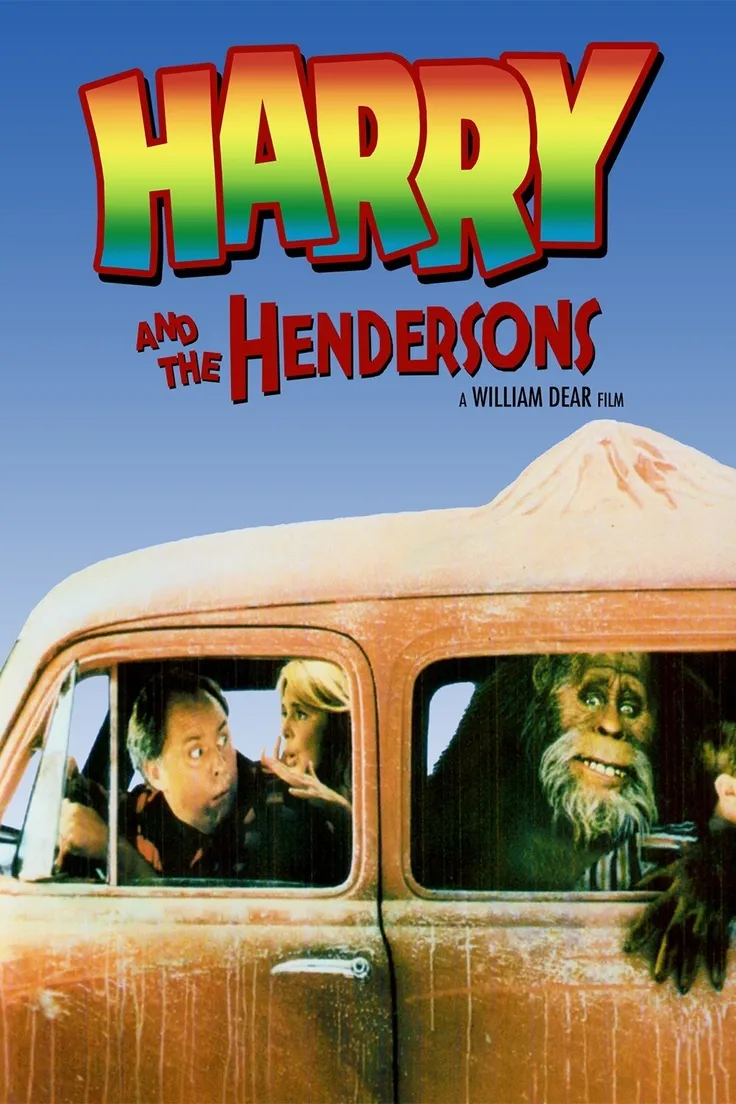 Photo: the Hendersons, via i.pinimg.com
That was the everyday reality of the party line — a shared telephone circuit that connected multiple households to a single line. For a huge stretch of the twentieth century, particularly in rural and small-town America, this wasn't a quirk or a temporary inconvenience. It was simply how the phone worked.
How the System Actually Worked
Telephone companies assigned multiple households to the same line as a way to extend coverage without building out expensive individual infrastructure. Each home on the line was given a distinct ring pattern — two short rings might be yours, one long ring your neighbor's — so you'd know when to pick up. In theory, everyone minded their own business and waited their turn.
In practice, it was considerably more complicated than that.
Anyone on the line could lift the receiver at any moment and hear whatever conversation was happening. There was no lock, no encryption, no warning tone. The only barrier between your private life and your neighbors' ears was basic social courtesy — and that, depending on the neighborhood, was a barrier with a lot of holes in it.
Party lines were especially common from the 1920s through the 1960s, though some rural communities were still running them into the 1980s. At their peak, tens of millions of American households shared lines. For many families, it was the only phone access they had. You either accepted the arrangement or you went without.
The Gossip Economy It Created
Here's the thing that gets lost in the retelling: the party line wasn't just a technical limitation. It was a social infrastructure.
In towns where everyone already knew everyone, the phone line became an extension of the front porch. Conversations that got overheard were often conversations that were, on some level, meant to travel. News moved fast on a party line. A birth, a death, a job loss, a new arrival in town — word spread in ways that no newspaper could match for speed or intimacy.
Some people became known as dedicated listeners. Neighborhoods had their regulars — the person who always seemed to pick up just as things got interesting, who could somehow relay the details of a conversation they weren't officially part of. It was intrusive. It was also, in its own strange way, a form of community participation.
For younger generations especially, the party line was where social life happened. Teenagers discovered early that timing mattered — you learned which hours your neighbors were least likely to be listening, and you made your calls accordingly. Privacy became something you had to engineer rather than something you were simply given.
What It Meant to Make a "Personal" Call
The contrast with today is almost dizzying. Modern communication is built on the assumption of privacy as a baseline right. End-to-end encryption. Private messaging. Do Not Disturb settings. We now live in a world where the idea of a stranger listening to your phone call feels like a violation so severe it could be criminal.
But for generations of Americans, the stranger on the line was your neighbor, and the line between community and intrusion was genuinely blurry.
There's something worth sitting with in that comparison. Today's private messaging apps, encrypted calls, and secure platforms were built in direct response to a hunger for communication that no one else could access. We've moved from a world where sharing a conversation was structurally unavoidable to one where sharing anything at all requires a deliberate, conscious choice.
The party line didn't just shape how people talked. It shaped what they were willing to say.
The Transition Nobody Celebrated
As private lines became more affordable through the 1950s and 60s, families upgraded when they could. There wasn't much mourning for the party line. People were genuinely relieved to have a conversation that stayed between the people having it.
But something quiet disappeared too. The shared line had created a kind of accidental community knowledge — a web of overlapping awareness that kept neighbors loosely connected to each other's lives. When everyone moved to private lines, that web dissolved. You could now call whoever you wanted, say whatever you needed, and nobody else would ever know.
That's an enormous gain in personal freedom. It's also, depending on how you look at it, the beginning of a certain kind of disconnection.
A Different Kind of Known
We talk a lot today about surveillance — about how tech companies track our calls, our searches, our locations. And those concerns are legitimate. But there's a strange irony in the fact that the generation most alarmed by digital surveillance grew up in a world where their actual neighbors could pick up a receiver and listen to them talk about their marriage.
The difference, of course, is consent and power. The neighbor on the party line was as exposed as you were. Today's data collectors are invisible, institutional, and operating at a scale that would have been incomprehensible in 1955.
Still, the party line reminds us that the idea of a truly private conversation is historically pretty new. For most of the time telephones existed in American homes, someone else was always potentially on the other end of the silence.
The world has changed remarkably. We just don't always notice which direction the change went.