The Streets Went Quiet at Six — And Everyone Knew Why
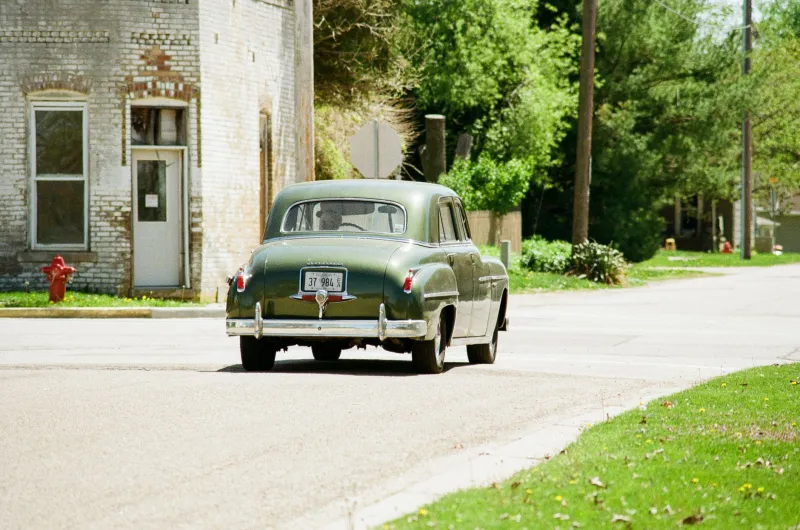
There's a particular quality of stillness that used to settle over American neighborhoods around six in the evening. If you grew up in a certain era, you know exactly what it felt like. The streets would empty. Bicycles would appear on front lawns, abandoned mid-ride. The last few cars would pull into driveways. Screen doors would bang shut. And from nearly every house, the smell of something warm and familiar would drift out into the cooling air.
Dinner was happening. Everywhere. All at once.
This wasn't a coincidence. It was a rhythm so deeply embedded in American daily life that it organized entire communities without anyone having to coordinate it.
When the Clock Ran Everything
For much of the twentieth century, the American dinner hour was close to a civic institution. Factories and offices operated on fixed schedules that released workers at predictable times. Schools dismissed at consistent hours. Businesses in most towns and suburbs closed by five or six. The whole infrastructure of daily life was designed around the assumption that people would be home for dinner.
Mealtimes weren't just family customs — they were community-wide synchronized events. If you were still outside at 6:15 on a Tuesday in 1962, something was wrong. You were late. You were in trouble. Or you were the one kid whose mother had already called down the block twice.
The dinner hour had genuine authority. It ended arguments, interrupted games, and overruled plans. "Time for dinner" wasn't a suggestion. It was a summons with the full weight of daily routine behind it.
The Meal That Organized the Day
What made this work, practically speaking, was that the entire day was structured around it. Lunch was a midpoint, a pause. Breakfast was fuel and departure. But dinner was the destination — the meal that everything else built toward.
Mothers (and it was almost always mothers, which is its own complicated story) planned the day around the evening meal. Grocery shopping, defrosting, prep work — all of it scheduled backward from the moment the family was supposed to sit down. The meal wasn't slotted into the day. The day was slotted around the meal.
And because nearly everyone was operating on roughly the same schedule, the infrastructure supported it. Your neighbor wasn't going to call during dinner. Your boss wasn't going to expect a response to a message at 6:30 pm. The phone would ring, and if it did, someone would answer it briefly and say they were eating. That was a complete explanation. It required no apology.
What the Shared Rhythm Actually Did
It's easy to look back at the structured dinner hour as a quaint relic, a Norman Rockwell painting come to life. But the synchronized rhythm of community mealtimes did something that's genuinely hard to replicate: it created a daily moment of collective pause.
When everyone stops at the same time, the stopping means something. There's a reason religious traditions have always attached significance to shared meals at fixed hours. The ritual of gathering, of setting aside the work of the day at a designated moment, does something for people psychologically that eating alone at a desk at whatever time happens to work cannot replicate.
Neighborhood life was calibrated to this rhythm in ways that went beyond the meal itself. The hour before and after dinner was its own social ecosystem. Kids playing outside until the call came in. Neighbors chatting over fences before heading in. The brief window after dinner when adults might sit on porches in the cooling evening. The dinner hour anchored an entire social architecture.
The Unraveling
The erosion of the shared dinner hour didn't happen suddenly. It was gradual, driven by changes that were, individually, entirely reasonable.
Extended retail hours meant more people working evenings. The rise of two-income households meant the logistics of a six o'clock family dinner became genuinely difficult to coordinate. Youth sports schedules expanded into evenings and weekends. The microwave made it possible to eat in shifts rather than together. Takeout and delivery removed the hard deadline of "it has to be ready by six or it won't be ready."
And then came the smartphone, which dissolved the last remaining boundaries between work hours and home hours. When your boss can reach you at 6:45 pm and expect a response, the dinner hour's authority collapses completely. The meal becomes one more task to fit in around everything else, rather than the fixed point the rest of the day orbits.
What We Traded It For
The flexibility we gained is real. Nobody is seriously arguing that families should return to rigid schedules that ignored individual needs and circumstances. The old dinner hour, like the handshake mortgage and the cream-of-mushroom casserole, had its shadow side — the pressure it placed on whoever was doing the cooking, the way it enforced a domestic structure that not everyone chose freely.
But the thing that replaced it — the endless operating hours, the grab-and-go culture, the meal eaten alone at a desk or in a car or in front of a screen — hasn't obviously made people happier. Study after study on loneliness, on family connection, on the psychological benefits of shared meals, points in the same direction: eating together, at a fixed time, with other people, does something for human beings that efficient solo eating cannot.
The streets don't go quiet at six anymore. Restaurants are full. Delivery drivers are everywhere. Someone is always open, always available, always ready to hand you something to eat on the go.
It's convenient. It's flexible. It's relentless.
And somewhere in all that availability, the daily pause that once gathered everyone home at the same moment has quietly disappeared — replaced by a thousand individual meals eaten at a thousand different times, each one perfectly optimized, none of them quite the same.