Where Men Solved the World One Haircut at a Time
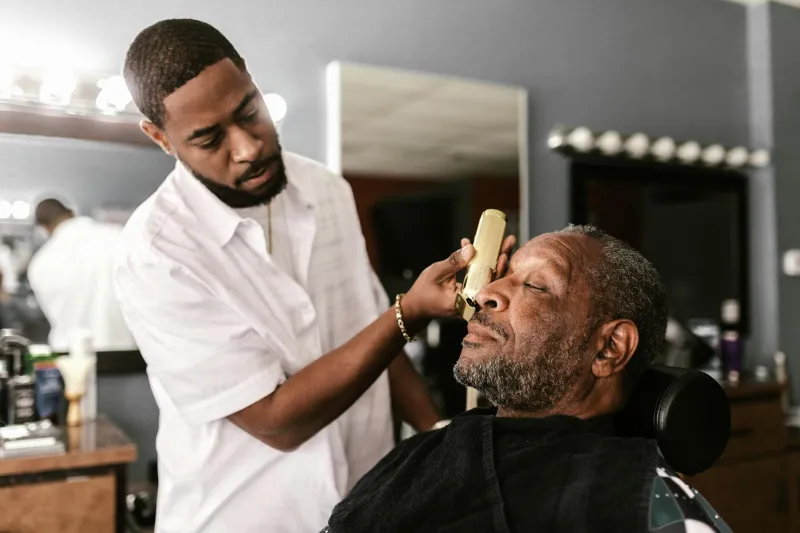
The Chair Where Democracy Lived
Walk into any barbershop in 1950s America, and you'd find something that seems almost impossible today: a room full of men from different backgrounds, ages, and political views, actually talking to each other. Not typing. Not posting. Talking.
The neighborhood barbershop was America's original social network, minus the algorithm. For over a century, these modest storefronts served as unofficial town halls where working-class philosophy met small-town wisdom, where teenagers learned how to argue respectfully from their elders, and where the day's events got processed through the collective wisdom of regular guys getting regular haircuts.
More Than Just a Haircut
Your barber knew your name, your job, your kids' names, and probably your opinion on the local baseball team's pitching rotation. He also knew when to talk and when to listen. The relationship between a man and his barber often lasted decades — a steady constant in an increasingly mobile society.
But the real magic happened in the waiting area. Mismatched chairs lined the walls, filled with men reading newspapers, playing checkers, or engaged in spirited debates about everything from city council elections to the Korean War. The barbershop operated on unwritten rules: respect your elders, no topic was off-limits, and everyone got to speak their piece.
The Daily News Cycle
Before CNN, before talk radio, before Twitter, the barbershop was where news got interpreted. The morning paper might report the facts, but the barbershop was where those facts got turned into understanding. Old-timers shared historical context. Veterans offered military perspective. Local business owners explained economic implications.
This wasn't the echo chamber of today's social media feeds. In a small town, the barbershop brought together the bank president and the factory worker, the retired teacher and the young mechanic. Disagreements were common, but they happened face-to-face, with handshakes afterward.
The Therapy Session You Didn't Know You Needed
Long before Americans normalized therapy, the barbershop provided a space for men to process life's challenges. Divorce, job loss, teenage kids acting up — these conversations happened naturally while waiting for a trim. The barber's chair became a confessional of sorts, where personal struggles got aired and collective wisdom got shared.
Barbers developed legendary skills in reading their customers' moods. They knew when to make conversation and when to work in comfortable silence. They understood that sometimes a man just needed someone to listen while he figured things out.
What We Lost When We Gained Convenience
Today's hair care landscape looks nothing like mid-century America. Chain salons with their efficiency-focused appointments replaced the leisurely barbershop experience. Unisex styling took over from the distinctly masculine space of the traditional barbershop. Most significantly, the social function simply disappeared.
Modern men get their hair cut in sterile environments with minimal conversation. They book appointments online, check their phones while waiting, and leave as quickly as possible. The idea of spending an entire Saturday morning at the barbershop, just talking, seems almost wasteful by contemporary standards.
The Digital Replacement That Isn't
Social media promised to connect us better than ever before. Instead, it created isolated bubbles where we mostly talk to people who already agree with us. The barbershop's greatest strength was its forced diversity — you couldn't curate your fellow customers the way you curate your Twitter feed.
The loss goes deeper than just social interaction. The barbershop taught valuable skills: how to disagree without being disagreeable, how to listen to perspectives different from your own, how to find common ground with people you might not encounter anywhere else.
The Ritual We Forgot We Needed
The weekly or bi-weekly trip to the barbershop provided something modern life struggles to replicate: regular, unscheduled time for community connection. It wasn't efficient, and it wasn't optimized. It was just human.
In our rush toward convenience and efficiency, we've eliminated most of the casual spaces where Americans used to bump into each other regularly. The barbershop was one of the last holdouts — a place where showing up was enough to join the conversation.
Some traditional barbershops still exist, often as nostalgic throwbacks rather than genuine community institutions. But the social infrastructure they once provided — the daily democracy of ordinary people working through complex issues together — has largely moved online, where the conversation is louder but somehow much less connected to the people sitting right next to us.