When Wrong Turns Made Right Memories — The Death of America's Happy Accidents
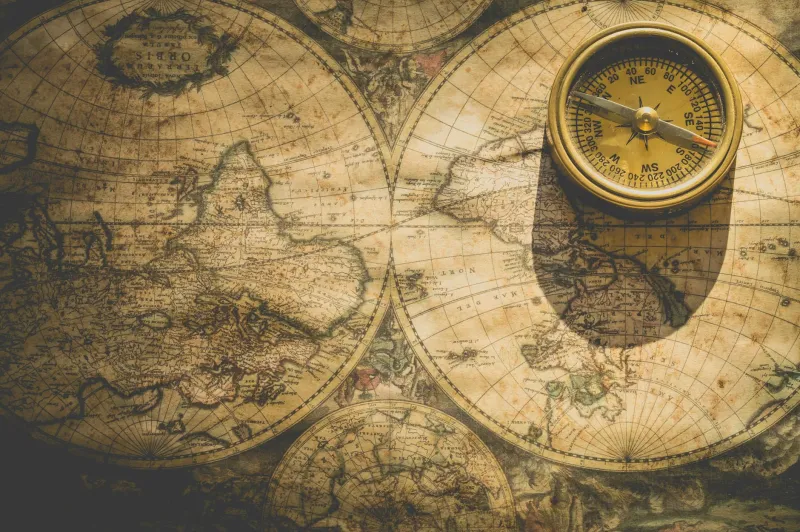
The Last Generation of Wanderers
There was a time when getting lost wasn't a problem to solve immediately — it was an opportunity waiting to unfold. Before Siri started barking directions and Google Maps eliminated every element of surprise from American travel, millions of people regularly stumbled into the experiences that would become their most cherished memories.
Your parents probably have stories about it. The family vacation where Dad's stubborn refusal to ask for directions led them to that incredible roadside diner with the best pie in three states. The Sunday drive that became an annual tradition after Mom took a wrong turn and discovered a scenic route through farmland that nobody knew existed. The couple who found their wedding venue because they got hopelessly turned around looking for a different location entirely.
These weren't just cute anecdotes — they were the fundamental way Americans related to the geography around them. Getting lost was how you learned your city had personality beyond the main thoroughfares.
When Maps Had Blank Spaces
In 1985, navigating meant spreading a paper map across your steering wheel at a gas station, tracing routes with your finger, and accepting that you'd probably miss a turn or two along the way. The Rand McNally Road Atlas was America's co-pilot, but it could only show you the roads that officially existed. It couldn't tell you about the shortcut through the residential neighborhood that locals used to bypass traffic, or warn you that the bridge on Route 34 had been under construction for six months.
This informational gap wasn't a bug — it was a feature. Every drive contained the possibility of discovery. Americans regularly found themselves on roads they'd never seen before, in neighborhoods they didn't know existed, face-to-face with businesses and landmarks that weren't in any guidebook.
The result was a kind of organic exploration that shaped how people understood their communities. You didn't just know the direct route from your house to work; you knew three different ways to get there, each discovered during a different navigational mishap. You had strong opinions about which gas station had the cleanest bathrooms, which intersection always backed up, and which side streets offered the prettiest views — knowledge earned through trial and error.
The Algorithm Knows Best
Today, 95% of American smartphone users rely on GPS navigation for trips longer than a few miles. The average driver follows turn-by-turn directions even for routes they've traveled dozens of times. We've optimized travel down to the minute, with apps that calculate the fastest route based on real-time traffic data, construction delays, and historical patterns.
The efficiency is remarkable. Modern navigation eliminates the frustration of circling unfamiliar neighborhoods, the anxiety of running late because you took a wrong turn, and the waste of time and gas that came with getting genuinely lost. Apps like Waze crowdsource traffic information from millions of users, creating a collective intelligence that can route you around accidents before they're even reported on the radio.
But this precision comes with an unexpected cost: the complete elimination of unplanned discovery from American travel.
The End of Accidental Tourism
When was the last time you stumbled across a restaurant that became your new favorite place? When did you last take an unplanned detour that showed you a part of your own city you'd never seen before? For most Americans, the answer is "years ago" or "never."
Modern navigation apps don't just tell you where to go — they actively prevent you from going anywhere else. They recalculate your route the moment you deviate from their instructions, treating any departure as a mistake to be corrected. The algorithm assumes that the fastest route is always the best route, eliminating the possibility that you might want to see something interesting along the way.
This shift has quietly changed how Americans relate to their physical environment. We move through space like packages in a delivery system, taking the most efficient path from point A to point B without engaging with anything in between. The landscape becomes background noise rather than something to explore.
What We've Traded Away
The death of getting lost has eliminated more than just the occasional serendipitous discovery. It's changed how Americans build relationships with places. Previous generations developed an intimate knowledge of their communities through navigation mistakes and exploratory drives. They knew which neighborhoods had the best Christmas lights, which back roads offered scenic alternatives to the highway, and which local businesses were worth seeking out.
This knowledge was earned through experience, shared through conversation, and passed down through families. It created a sense of ownership and connection to place that went beyond just knowing your home address.
Today's navigation culture produces a different relationship with geography — one based on efficiency rather than familiarity. We know how to get where we're going, but we don't necessarily know where we are along the way.
The Roadmap Forward
This isn't an argument for throwing your smartphone out the window and returning to paper maps. The safety and convenience benefits of modern navigation are undeniable, especially for travelers in unfamiliar areas or people with mobility challenges.
But there's something to be said for occasionally choosing the scenic route over the fastest route, for exploring your own neighborhood without a destination in mind, and for accepting that the best discoveries often happen when you're not looking for them.
The next time you're driving somewhere familiar, consider putting the phone away and seeing what you notice when you're not following directions. You might just stumble into something remarkably worth finding.