When Getting There Was Half the Fun — How America Lost the Art of Wandering
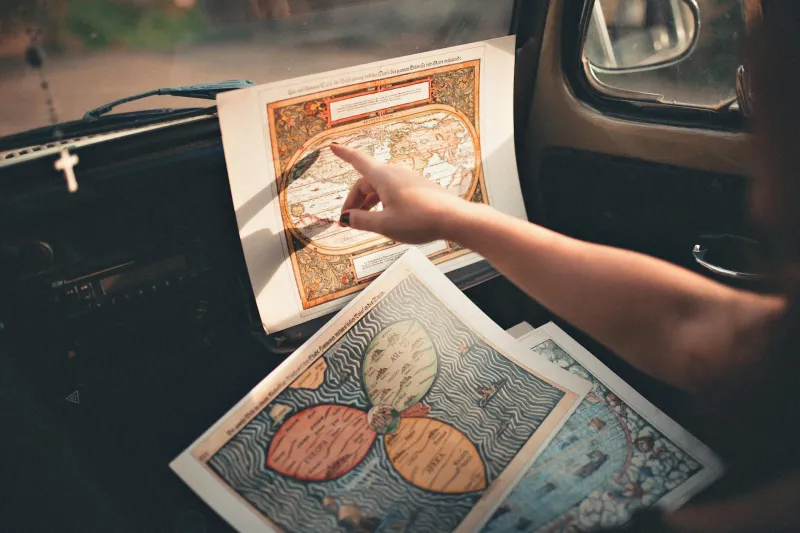
Pull over at any rest stop today and watch families pile out of minivans, phones already buzzing with turn-by-turn directions to their next destination. Compare that to 1985, when the same family would unfold a massive paper map across the picnic table, trace routes with their fingers, and debate whether to take the scenic route or the "faster" interstate — knowing full well that faster was relative when you had no real-time traffic data.
The Ritual of the Glove Compartment Atlas
Every American car once carried the same essential equipment: a dog-eared road atlas, probably a Rand McNally, stuffed into the glove compartment alongside registration papers and a flashlight that may or may not work. These weren't just navigation tools — they were conversation starters, trip planners, and sources of endless family debates.
Before leaving for vacation, families would gather around the kitchen table with their atlas, plotting routes like military strategists. Dad would trace the interstate with his finger while Mom suggested scenic alternatives. Kids would calculate distances and argue over which states they'd drive through. The planning was part of the adventure, and everyone had opinions about the best way to get from Point A to Point B.
Getting lost wasn't a failure — it was practically guaranteed. And when it happened, you had options that seem almost quaint today: pull into a gas station and ask for directions, consult road signs that may or may not be helpful, or simply keep driving until something looked familiar. Gas station attendants were unofficial tour guides, dispensing local knowledge along with directions: "Take Highway 9 about fifteen miles, but watch out for that speed trap near the church."
The Serendipity of Wrong Turns
Without GPS constantly recalculating the optimal route, American families discovered places they never intended to visit. That wrong turn in rural Montana led to a roadside diner with the best pie in three counties. The missed exit in Ohio meant stumbling upon a quirky roadside attraction that became the highlight of the trip. Getting lost forced you to pay attention to your surroundings, to notice landmarks, and to develop what psychologists call spatial awareness.
Children in the backseat learned geography through experience, not screens. They watched mile markers count down, learned to read road signs, and developed an intuitive sense of direction. "Are we there yet?" was a genuine question, not a complaint born of boredom with perfectly predictable arrival times.
Road trips moved at the speed of discovery. You might spend an extra hour in a small town because someone mentioned a historic covered bridge, or take a detour because a billboard promised "World's Largest Ball of Twine." These weren't inefficiencies — they were the point.
The Death of Navigation Skills
Today's GPS-guided journey is a marvel of efficiency. Your phone knows exactly where you are, where you're going, and the fastest way to get there. It warns you about traffic jams, suggests alternate routes, and even tells you which lane to be in. You'll arrive precisely when predicted, having taken the optimal path.
But something profound has been lost in this optimization. Studies show that people who rely heavily on GPS develop weaker spatial memory and navigation skills. We've become passengers in our own journeys, following blue dots on screens rather than reading the landscape around us.
The modern road trip is front-loaded with research. We know about every restaurant, attraction, and photo opportunity before we leave home, thanks to TripAdvisor reviews and Instagram hashtags. The element of surprise has been largely eliminated, replaced by the comfort of knowing exactly what to expect.
What We Traded for Efficiency
GPS has undeniably improved our lives in countless ways. Emergency services can locate us instantly. We waste less time and fuel on inefficient routes. The stress of being genuinely lost — not knowing where you are or how to get where you're going — has been virtually eliminated.
But we've also lost something harder to quantify: the tolerance for uncertainty that made travel an adventure rather than just transportation. The willingness to take the long way because it might be interesting. The patience to let a journey unfold organically rather than optimizing every mile.
Pre-GPS families developed problem-solving skills, learned to work together under pressure, and created stories that lasted decades. "Remember when we got lost in Nebraska and ended up at that weird museum?" became family legend. Today's precisely navigated trips generate fewer stories because there are fewer surprises.
The Road Less Calculated
Some travelers are pushing back against GPS tyranny, deliberately leaving their phones in airplane mode or choosing routes based on whim rather than algorithm. They're rediscovering what previous generations knew instinctively: that getting there can indeed be half the fun, especially when you're not entirely sure how you're going to get there.
The next time you're planning a road trip, consider printing out a paper map. Leave some room for serendipity. Take the exit that looks interesting, even if it's not the fastest route. You might get lost, but you might also find something remarkable — including a part of yourself that's been quietly atrophying in the age of turn-by-turn directions.