The Doctor Will See You at Home — When Medicine Made House Calls and Knew Your Family History
The Doctor Will See You at Home — When Medicine Made House Calls and Knew Your Family History
Dr. Robert Henderson kept his medical bag by the front door, ready for the call that would send him racing through the streets of suburban Cleveland at 2 AM. It was 1962, and like thousands of family doctors across America, Henderson didn't just treat patients — he knew them. He'd delivered their babies, set their children's broken bones, and sat with their grandparents during their final hours.
Today, that black bag sits in a medical museum, a relic of an era when healthcare was built on relationships instead of algorithms.
When Your Doctor Was Your Neighbor
In the 1950s and 60s, most Americans had a family doctor who lived in their community and treated multiple generations of the same families. These physicians maintained detailed mental files on their patients' histories, quirks, and family dynamics. Dr. Sarah Mitchell from Portland, Maine, could tell you that the Johnson family had a genetic predisposition to heart disease, that little Tommy always faked stomach aches on test days, and that Mrs. Johnson's anxiety flared up every winter.
This wasn't just small-town medicine — even in major cities, neighborhood doctors knew their patients personally. They attended the same churches, shopped at the same stores, and their children played together after school.
Compare that to today's healthcare maze: the average American sees 18.7 different doctors throughout their lifetime, and most primary care physicians spend just 13-16 minutes per patient visit. Electronic health records, designed to improve care coordination, often create more barriers than bridges between doctors and patients.
The House Call Revolution
Perhaps nothing illustrates the transformation more dramatically than the death of the house call. In 1930, 40% of all medical encounters happened in patients' homes. By 1950, it was still 10%. Today, house calls represent less than 1% of medical visits.
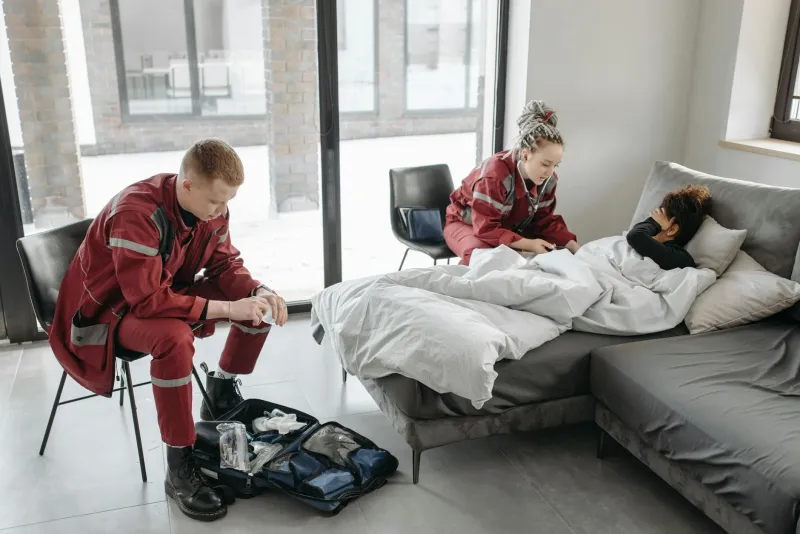
Dr. Henderson's typical day included morning office hours, afternoon house calls, and evening hospital rounds. He'd examine feverish children in their own bedrooms, check on recovering surgical patients in their living rooms, and counsel worried parents in their kitchens over coffee.
"You learned so much about a patient by seeing them at home," recalls Dr. Margaret Foster, who practiced family medicine in Iowa from 1955 to 1995. "You'd notice if they weren't taking their medications, if they had family stress, if their living conditions were affecting their health. You can't get that in a sterile exam room."
When Medicine Moved to the Assembly Line
The shift began in the 1970s with the rise of health maintenance organizations (HMOs) and accelerated through the 1980s and 90s as healthcare became increasingly corporate. Suddenly, efficiency metrics mattered more than bedside manner. Doctors were pressured to see more patients in less time, and house calls became economically unsustainable.
Insurance companies began dictating treatment protocols, and physicians found themselves spending more time on paperwork than with patients. The average doctor today spends 16 minutes per day on each patient's electronic health record documentation — often more time than they spend face-to-face with the patient.
The economics tell the story: in 1970, 76% of doctors worked in practices they owned. Today, that number has flipped — 70% of doctors are employees of hospitals or large medical groups. The independent family practitioner, once the backbone of American medicine, has become nearly extinct.
What We Lost in Translation
Modern medicine has achieved remarkable things — survival rates for heart attacks, strokes, and cancers have improved dramatically. Diagnostic tools can detect diseases earlier and more accurately than ever before. But something essential was lost in the transition.
Patients today often feel like customers in a healthcare factory. They're shuffled between specialists who rarely communicate with each other, forced to repeat their medical history to every new provider, and treated for symptoms rather than as whole human beings.
The average American now waits 24 days to see a primary care physician for a routine appointment. Emergency rooms have become the default for basic medical care, with average wait times of 2-3 hours. Mental health services, once integrated into family practice, now require separate referrals and often months-long waiting lists.
The Prescription for Nostalgia
Some healthcare providers are trying to recapture elements of the old model. Concierge medicine, where patients pay annual fees for enhanced access and longer appointments, has grown 300% in the past decade. House call services are making a comeback in urban areas, though they serve primarily wealthy patients who can afford to pay out-of-pocket.
Telemedicine, accelerated by the COVID-19 pandemic, offers new possibilities for personal connection, though it can't replicate the intimacy of a doctor sitting beside your bed, taking your pulse, and really listening to your concerns.
Dr. Foster, now 89, reflects on the changes with mixed feelings. "We can do things now that seemed impossible in my early days — save premature babies, replace hearts, cure cancers that were once death sentences. But we've lost the art of healing, the human touch that made people feel cared for, not just treated."
The Diagnosis
The transformation of American medicine from a relationship-based profession to a corporate industry represents one of the most profound changes in how we experience one of life's most vulnerable moments — being sick. While we've gained technological miracles, we've lost something harder to quantify but equally important: the comfort of being known, truly known, by the person responsible for our health.
That black medical bag sitting in the museum represents more than outdated equipment — it symbolizes an era when medicine was practiced with the understanding that healing involves more than just fixing what's broken. Sometimes, the most powerful medicine was simply the reassurance that someone who knew you, cared about you, and would be there when you needed them most.
In our rush toward efficiency and technological advancement, we might want to ask: what kind of medicine do we really want when we're at our most vulnerable? The answer might be simpler than we think — we want to be seen, known, and cared for as human beings, not just as cases to be processed.