When America Knew Which Way Was North — How We Traded Navigation Skills for Digital Dependency
The Last Generation to Know Where They Were
There was a time when your dad could drive across three states without ever consulting anything more than the position of the sun and maybe a gas station attendant's hand-drawn directions on a napkin. Americans once possessed what seemed like an internal compass — an intuitive understanding of cardinal directions, distances, and the relationship between where they were and where they needed to be.
That era ended so gradually we barely noticed it happening.
Today, we live in a world where grown adults panic when their phone dies mid-route, where college students can't find their way back to their dorm without turn-by-turn instructions, and where the phrase "I have no sense of direction" has become as common as "I'm not good with technology" was twenty years ago.
The Golden Age of the Glove Compartment Atlas
Before GPS became standard in every smartphone, navigating America required actual skill. Your car's glove compartment held a thick, spiral-bound atlas — usually a Rand McNally — with pages worn soft from constant use. The covers were often held together with electrical tape, and certain pages (usually the ones covering your home state) were practically memorized.
Families would spend Sunday afternoons planning road trips, tracing routes with their fingers, calculating mileage, and identifying alternate paths in case of construction or traffic. Children learned to read maps before they could properly read books, understanding that the blue lines meant water, the thick red lines were interstates, and the tiny numbers told you how many miles lay between towns.
This wasn't just about getting from point A to point B. Map reading was a fundamental life skill, like balancing a checkbook or changing a tire. You developed spatial reasoning, learned to estimate distances, and built what psychologists call "cognitive maps" — mental representations of your environment that helped you navigate even unfamiliar territory.
When Getting Lost Was Part of Getting There
Getting lost wasn't the catastrophe it feels like today. It was an expected part of any journey, especially when exploring new places. Americans developed strategies for being lost: find a gas station, look for road signs, retrace your steps to the last landmark you recognized.
More importantly, being lost taught you to pay attention. You noticed which direction you'd been traveling, what the landscape looked like, how long you'd been driving. You developed what researchers now call "wayfinding skills" — the ability to create and update mental maps in real-time.
Families would argue over routes ("We should have taken 35 north!"), but these arguments required everyone to understand geography, distances, and alternative paths. Even the passenger seat navigator had to actively engage with the journey, calling out upcoming turns and watching for mile markers.
The Smartphone Revolution That Rewired Our Brains
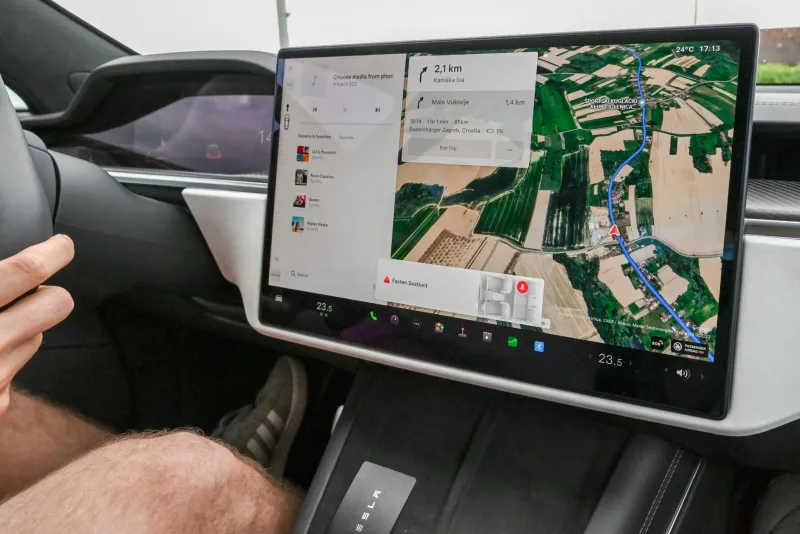
When GPS technology moved from expensive dashboard units to free smartphone apps, it seemed like pure progress. No more pulling over to unfold enormous paper maps. No more arguing about directions. No more getting lost.
But neuroscientists are discovering that our brains adapted to this convenience in ways we didn't anticipate. The hippocampus — the brain region responsible for spatial memory and navigation — literally shrinks when we don't use it. London taxi drivers, who must memorize the city's entire street layout, have enlarged hippocampi. But GPS users show the opposite effect.
We've become what researchers call "passengers in our own journeys." Instead of actively navigating, we passively follow instructions. Instead of building mental maps, we rely on digital ones. Instead of developing spatial intelligence, we've outsourced it to our phones.
What We Lost When We Stopped Looking Up
The shift from map-based to GPS navigation represents more than just technological progress — it's a fundamental change in how we relate to our environment. Pre-GPS Americans developed what anthropologists call "place attachment" — a deep, intuitive connection to their geographic surroundings.
They knew which way was north without thinking about it. They could estimate distances by feel. They understood their hometown's layout so thoroughly they could give directions using landmarks instead of street names: "Turn left at the old Woolworth's, then go straight until you see the water tower."
This spatial awareness extended beyond driving. People could sense when they were heading toward home, even from miles away. They developed internal odometers that helped them judge travel times. They learned to read the landscape — understanding that rivers generally flow south, that mountains create their own weather patterns, that certain types of vegetation indicated elevation changes.
The Unintended Consequences of Never Being Lost
Today's navigation technology is undeniably superior in terms of efficiency. GPS can calculate optimal routes in real-time, account for traffic conditions, and guide us through complex urban environments with surgical precision. But this efficiency comes with hidden costs.
Young adults report feeling anxious when they don't have GPS access, even in familiar areas. Emergency responders note that people increasingly can't describe their location beyond "I'm somewhere on the highway." Urban planners worry that GPS routing creates traffic bottlenecks as everyone follows identical paths.
Perhaps most significantly, we've lost the sense of adventure that came with navigating by instinct. The detours, wrong turns, and unexpected discoveries that once defined American road culture have been optimized away.
Finding Our Way Forward
The irony is that in gaining the ability to never be lost, we've lost something essentially human — the satisfaction of figuring out where we are and how to get where we're going. We've traded self-reliance for convenience, spatial intelligence for digital dependency.
This doesn't mean we should abandon GPS technology. But perhaps we could occasionally turn it off, unfold a paper map, and remember what it feels like to navigate by our own wits. Because knowing where you are — really knowing, not just following blue dots on a screen — is about more than just getting from here to there. It's about understanding your place in the world.