Waiting for Words — How Letters Shaped the Pace of Longing and Connection
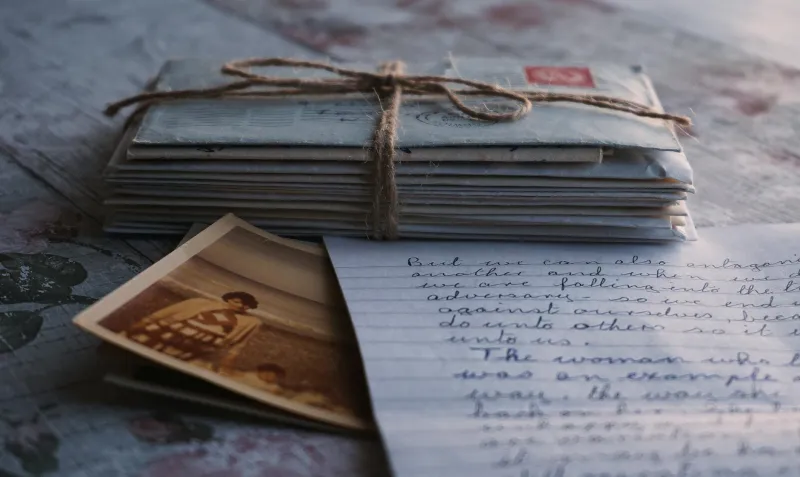
The Weight of Ink and Anticipation
There's a particular kind of ache that belongs only to a certain era—the ache of waiting for a letter.
Imagine this: It's 1965, and you're a college student, away from home for the first time. You miss someone. You want to tell them things. So you sit down at your desk, pull out paper and pen, and you write. Not a quick note. A real letter. You choose your words because words cost something when you have to write them by hand. You tell them what you're thinking about, what you're worried about, what made you laugh. You fold the letter carefully, put it in an envelope, address it by hand, find a stamp, and walk to the mailbox.
Then you wait.
Three days, maybe four if it's going across the country. A week if it's going further. During that time, you think about what you wrote. You wonder if they'll understand what you meant. You replay conversations in your head, wishing you could add something, clarify something, take something back. You check the mailbox every day. And when the reply finally arrives—when you see their handwriting on an envelope addressed to you—the moment carries weight.
You open it slowly. You read it slowly. You might read it several times. Their words are there, preserved, something you can hold and return to. And then you sit down and write back.
This was how Americans maintained relationships across distance for centuries. Not just romantic relationships, but friendships, family connections, professional correspondence. The rhythm of this exchange shaped how people thought, felt, and connected.
The Architecture of Intentionality
Letter-writing required a kind of intentionality that's almost alien to modern communication. You couldn't dash off a thought in a second. You had to compose. You had to think about what mattered enough to write down, what was worth your time and the other person's time to read.
There was also a formality to it, even among close friends and family. Letters began with a greeting, ended with a closing. They had structure. They weren't just information transfer—they were small performances, tiny essays, artifacts of a moment in time. People kept letters. They reread them. Some of the most profound literature we have comes from letters: soldiers writing home from war, lovers separated by circumstance, artists describing their creative struggles to friends.
The slowness wasn't a limitation. It was essential to the experience. The days between sending and receiving created space for reflection. If you were angry when you wrote a letter, you might have calmed down before it arrived. The person reading it had time to consider their response, to craft something thoughtful rather than reactive. Misunderstandings could happen—of course they could—but the deliberate pace also created room for grace.
For much of the 20th century, the mailbox was a moment of genuine possibility. You never knew what might arrive. A letter from a distant friend. News from a relative. A rejection or acceptance letter that could change your life. The mail came at a specific time each day, and you checked it. It was an event.
The Collapse of Distance
Then, in a span of a few decades, everything accelerated.
Email arrived in the 1990s and promised to be a faster version of letters—still composed, still somewhat formal, still a record of communication. But it was faster. Much faster. You could send something and get a response within hours, sometimes minutes. The pause between thought and reply began to shrink.
Then came text messaging. A text is not a letter. It's not even really a message in the traditional sense. It's a fragment, often ungrammatical, almost always reactive. You send a thought and expect an immediate response. The person on the other end feels obligated to reply quickly. The pause—that essential pause that allowed for reflection—is gone.
Now we have instant messaging apps, Snapchat, DMs, WhatsApp. Communication has become frictionless. You can reach someone across the world in a second. But what you're sending has become smaller, less considered, more disposable. A text is something you send and forget. It's not something you keep. It's not something you reread. It's consumed and gone.
The speed is genuinely convenient. If you need to tell someone something urgent, you can. If you want to coordinate plans, you can do it in real-time. This is undeniably useful. But something else has happened in the process.
What Disappeared in the Speed
When communication became instant, the nature of connection changed. There's no longer anticipation in the traditional sense—no checking the mailbox with hope. Instead, there's anxiety if someone doesn't respond within minutes. The pause that once allowed for reflection now feels like abandonment or rudeness.
We've lost the artifact quality of communication. Letters were things you saved, sometimes for a lifetime. You could return to them years later and reconnect with who you were when you wrote or received them. A text thread is ephemeral by design. Most people delete their messages. Even if they don't, the casual nature of the communication—the abbreviations, the lack of punctuation, the fragments—doesn't invite rereading.
We've also lost something about the depth of attention. When you write a letter, you're giving someone your full, focused thought. When you're texting, you're usually doing five other things. The communication is shallower not because people are shallower, but because the medium itself is shallow. It's designed for efficiency, not depth.
And perhaps most significantly, we've lost the understanding that distance matters. When communication was slow, you accepted that you couldn't have an immediate answer. You had to tolerate the gap. That tolerance—that acceptance that you couldn't control when someone would respond—built a kind of patience that modern life doesn't require anymore. Now, if someone doesn't respond within an hour, we wonder what's wrong. If they don't text back, we assume they're upset with us.
The Quiet Reclamation
Interestingly, letter-writing hasn't entirely disappeared. There's a small but growing community of people who've deliberately chosen to slow down their communication. Pen pal services have experienced unexpected popularity. Some people write letters by hand not because they have to, but because they want to. They've discovered that the slowness is actually the point.
These aren't Luddites rejecting technology. They're people who've experienced the cost of constant, frictionless communication and are choosing, deliberately, to reintroduce some friction. They're discovering that waiting for a letter is actually a gift—it forces you to sit with your feelings instead of immediately expressing them. It creates anticipation. It creates something that matters.
The Pause That Made Us Human
The story of letters and instant messaging isn't really about technology. It's about what happens to human connection when we remove the pause. We gained speed and convenience. We lost patience, depth, and the ability to tolerate uncertainty.
Somewhere in the shift from letters to texts, we also lost the understanding that the waiting itself was part of love. That distance was something you had to work to bridge. That words, once written and sent, mattered because they couldn't be immediately unsaid or clarified.
The mailbox is mostly empty now. But for those who've rediscovered letter-writing, it's become a small rebellion against a world that demands our response in real-time. It's a way of saying: your words matter enough that I'll wait for them. And I'll write back carefully, because what I'm sending matters too.