The Table Was Sacred — Why American Families Stopped Breaking Bread Together
The Ritual That Anchored America
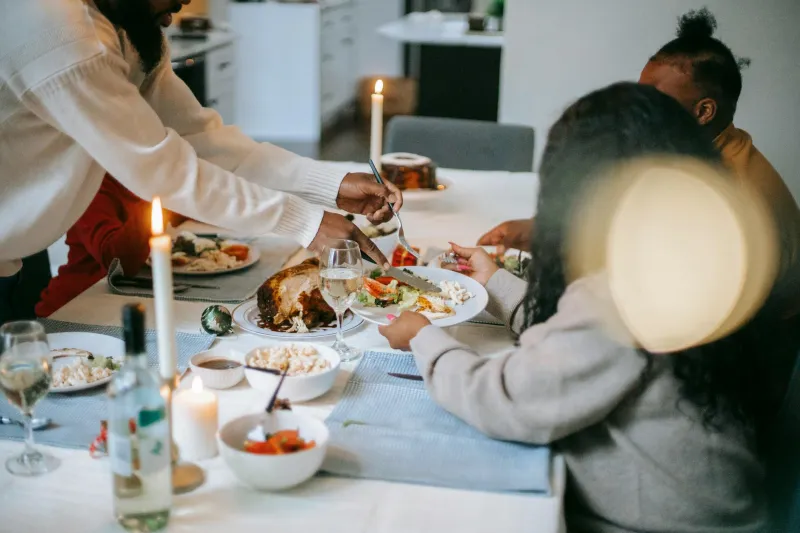
Walk into a suburban home in 1955, and you'd find a scene that repeated itself almost every evening. At 6 p.m., the family gathered at the dinner table. Mom had prepared a hot meal. Dad put down the newspaper. The children appeared from wherever they'd been playing. For perhaps an hour, there was no television, no radio, no interruption. There was food, conversation, and the unspoken understanding that this hour belonged to the family.
It wasn't just a meal. It was structure. It was belonging. It was where children learned to sit still, to listen, to speak when spoken to, and to hear about their parents' day. It was where family news was shared, where values were transmitted, where a child learned they were part of something larger than themselves.
The numbers tell the story of a world that existed. In the 1960s, surveys showed that roughly 50% of American families ate dinner together on any given night—and for many of those families, it was a daily occurrence, not an exception. The dinner table was so central to American family life that architects designed homes around it. The dining room wasn't a luxury; it was a room that mattered. Kitchens opened into dining areas so that the person cooking could remain part of the conversation. Homes were smaller, but they were organized around gathering.
The Slow Unraveling
Then, gradually, the rhythm changed.
The shift wasn't sudden. It happened incrementally, driven by forces that seemed reasonable on their own: longer commutes, more mothers in the workforce, kids in after-school activities that ran until 6 or 7 p.m., the rise of television, the invention of the microwave, the normalization of eating in cars, the proliferation of fast food, and eventually, the smartphone that made every family member their own entertainment center.
By the 1980s, the nightly family dinner had become less common. By the 2000s, it was increasingly rare. Today's data is sobering: only about 30% of American families eat dinner together regularly. For many households, "together" means in the same room, but on different devices. Others don't gather at all—family members eat at different times, in different places, often standing up or in front of a screen.
The dining room itself began to disappear from home designs. Open-concept kitchens replaced formal dining areas. Countertops became eating surfaces. The table, once the anchor of family life, became optional.
What We Lost (And What We Gained)
Researchers have spent decades studying what happens when families eat together, and the findings are remarkably consistent. Children who share regular meals with their parents perform better academically, have fewer behavioral problems, and show lower rates of depression and anxiety. They're also less likely to struggle with substance abuse. These aren't small correlations—they're significant, measurable differences in life outcomes.
But the benefits extend beyond the children. The shared meal is where parents learn what's happening in their kids' lives. It's where family members practice conflict resolution, where humor happens, where boredom forces actual conversation instead of the curated highlights of social media. Meals together are where cultural traditions are passed down, where recipes become family heirlooms, where stories get told again and again until they become part of a family's identity.
When the table disappeared, something quieter disappeared too: the assumption that the family's time together mattered more than individual convenience.
What we gained, of course, was efficiency and choice. No one had to eat something they didn't like. No one was trapped at the table if they had homework or a game or a screen calling them away. Parents could work later. Kids could pursue more activities. The rigidity of the 6 p.m. dinner felt, to many, like a constraint worth shedding.
But the trade-off was steeper than most people realized.
The Quiet Rebellion
Interestingly, something unexpected is happening. In pockets across America, families are deliberately reclaiming the dinner table. Not out of nostalgia, but out of recognition that something important was lost.
These aren't families retreating from modernity. They're often busy, working professionals with kids in multiple activities. But they've decided that one hour, four or five nights a week, is non-negotiable. They've put phones in another room. They've simplified meals so that cooking doesn't become a source of stress. They've discovered that the dinner table, far from being an old-fashioned relic, is actually a radical act in a world that's designed to pull families apart.
Parents report that their teenagers actually talk to them at dinner—not because they're forced to, but because it's the one time when everyone is present and there's nothing else competing for attention. Younger children slow down enough to be present. Families remember why they liked each other.
It's not a return to the 1950s. These dinners are often simpler, shorter, more flexible. But the principle is the same: the family that gathers together, still matters.
The Table Remains
The story of the vanishing family dinner is, ultimately, a story about what we choose to prioritize. For decades, we optimized for convenience, individual autonomy, and productivity. We gained flexibility and choice. But we also discovered, slowly, that something irreplaceable had slipped away in the process.
Today, the dining room is making a quiet comeback. Not in every home, and not in the rigid form it once took. But in homes where families have decided that being together, with intention and without distraction, is worth protecting.
The table is still there. It's waiting.