The Summer That Lasted Forever — When American Kids Disappeared at Dawn and Nobody Called the Police
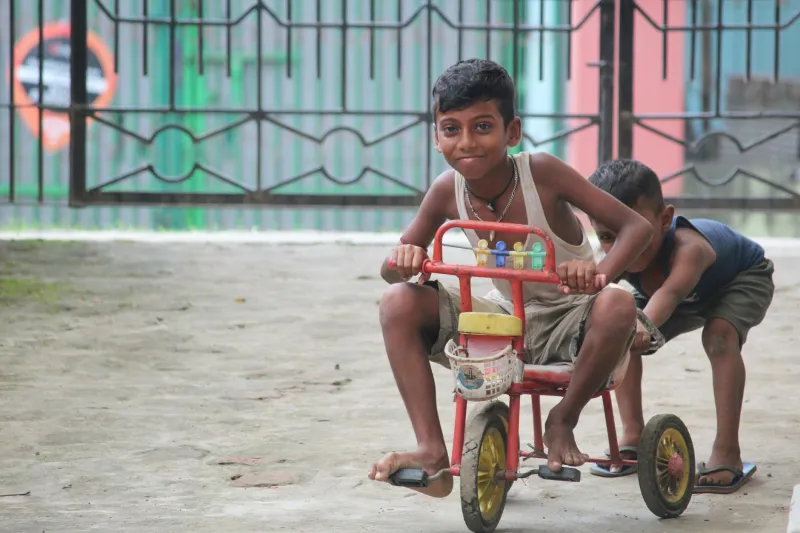
The Great Disappearing Act
Every summer morning in 1975, eight-year-old Tommy Martinez would gulp down his cereal, grab his bike, and announce to his mother, "I'm going out." She'd wave from the kitchen sink without looking up. "Be back for dinner." That was it. No itinerary. No check-ins. No GPS tracker sewn into his Toughskins jeans.
Tommy would spend the next ten hours building forts in vacant lots, riding his Schwinn to the creek two miles away, and playing pickup baseball games that lasted until someone's mom finally rang the dinner bell. His parents had no idea where he was, and that was perfectly normal.
Today, Tommy's parenting style would probably trigger a visit from Child Protective Services.
When the Neighborhood Was Your Babysitter
In mid-20th century America, childhood operated on what sociologists now call "free-range" principles. Kids as young as five roamed their neighborhoods with a freedom that would horrify modern parents. They walked to school alone, rode bikes without helmets, and spent entire days exploring without adult supervision.
The typical suburban street functioned as an extended playground. Children from different houses would naturally gravitate toward each other, forming impromptu gangs that lasted the length of a summer or sometimes years. They'd knock on doors asking if friends could "come out and play" – a phrase that's become almost quaint in our era of scheduled playdates.
Parents operated under an unspoken social contract: everyone's kids were everyone's responsibility. Mrs. Johnson would send you home if you were acting up. Mr. Peterson would patch up your scraped knee and call your mom later. The ice cream truck driver knew which kids had money and which ones were hoping for charity.
The Rise of the Scheduled Child
Somewhere between 1980 and 2000, American childhood transformed completely. What had been an unstructured adventure became a carefully orchestrated performance. Today's children move through their days like tiny executives, shuttling between soccer practice, piano lessons, tutoring sessions, and supervised playdates.
The average American child now spends less than seven hours per week in unstructured outdoor play – a 50% decrease from 1981. Meanwhile, time spent in organized activities has doubled. Parents plan their children's social lives weeks in advance, coordinating schedules with the precision of international diplomats.
Where kids once disappeared for hours, they now carry smartphones that ping their location every few minutes. Apps like Life360 allow parents to track their children's movements in real-time, receiving alerts when they arrive at school or leave soccer practice.
Fear Changed Everything
The shift wasn't gradual – it was seismic. A series of high-profile child abduction cases in the 1980s, amplified by 24-hour news coverage, convinced American parents that stranger danger lurked around every corner. The reality that children were statistically safer than ever before got lost in the emotional tsunami of worst-case-scenario thinking.
Legal changes followed cultural ones. Many states now have laws defining what age children can be left unsupervised or walk to school alone. In 2014, a South Carolina mother was arrested for letting her nine-year-old play at a park while she worked at McDonald's nearby. In 2015, Maryland parents faced child neglect charges for allowing their 10 and 6-year-old to walk home from a park alone.
What previous generations considered normal parenting became potential criminal behavior.
The Lost Art of Boredom
Perhaps the most profound change is the elimination of boredom from childhood. Kids in the 1970s spent countless hours with absolutely nothing to do – and that's when magic happened. They invented games, built elaborate fantasies, and learned to entertain themselves.
Today's children rarely experience true boredom. When they're not in structured activities, they're often consuming digital entertainment. The creative problem-solving that came from having "nothing to do" has been replaced by the passive consumption of content designed by adults.
Child psychologists now worry about "continuous partial attention" – kids who never fully focus on one thing because they're constantly stimulated. The deep, imaginative play that characterized earlier generations requires sustained attention and uninterrupted time.
What We Gained and Lost
Modern childhood isn't entirely worse – it's remarkably different. Today's kids are safer, more supervised, and often more accomplished than their free-range predecessors. They speak multiple languages, play competitive sports, and master technology with ease.
But something intangible was lost in the transformation. The confidence that comes from navigating the world independently. The social skills developed through unsupervised peer interaction. The creativity born from genuine boredom. The deep sense of neighborhood belonging that came from knowing every street, shortcut, and hiding spot within a two-mile radius.
The Pendulum Swings
Some modern parents are pushing back, embracing "free-range" parenting philosophies that echo earlier generations. They're fighting for their children's right to walk to school, play outside unsupervised, and experience the productive struggle of figuring things out independently.
But they're swimming against a powerful cultural current. Insurance policies, school regulations, and neighborhood norms all conspire to keep children under constant adult supervision.
The summer that lasted forever – when kids could disappear into their neighborhoods and return with scraped knees, new friends, and stories their parents would never quite believe – feels as distant as the era of milk delivery and corner drugstores. Whether that's progress or loss depends on what you value more: safety or adventure, structure or discovery, protection or independence.
One thing is certain: childhood will never be the same.