Before Speed Became Everything — When America's Diners Made Every Journey Worth Remembering
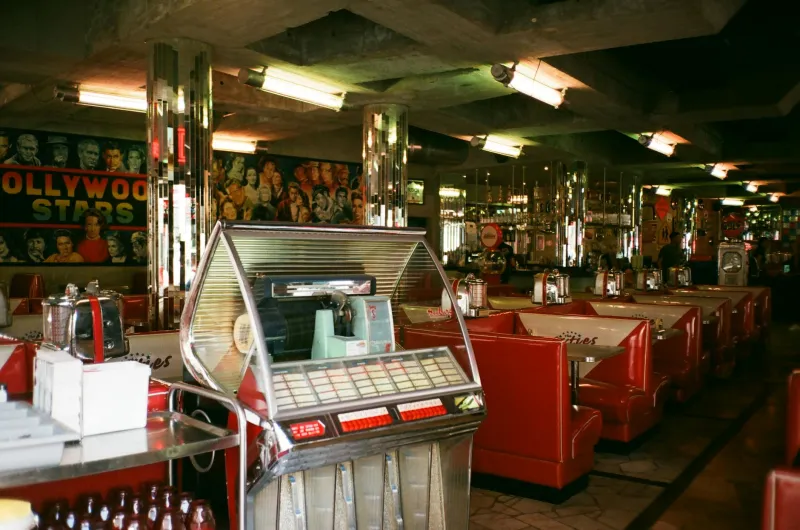
The Mandatory Pause That Built America
Pull off any interstate highway today, and you'll find the same predictable lineup: McDonald's, Subway, Taco Bell, maybe a Cracker Barrel if you're lucky. Grab your food, eat in your car, and get back on the road in fifteen minutes flat. Mission accomplished, miles devoured, time saved.
But for most of the 20th century, American road travel operated on completely different principles. Every journey included mandatory pauses at places that couldn't be rushed, couldn't be standardized, and couldn't be experienced without getting out of your car and sitting next to strangers at a counter that had probably been there longer than you'd been alive.
The American roadside diner wasn't just a place to eat. It was where the democracy of the road played out one cup of coffee at a time.
Where the Road Brought Everyone Together
Step into a genuine diner in 1965, and you'd find America's most successful experiment in class integration happening naturally every day. At the counter, a long-haul trucker might sit next to a traveling salesman, who sat next to a family on vacation, who sat next to a local farmer grabbing his morning coffee before heading to the fields.
This wasn't planned diversity. It was the inevitable result of geography and necessity. Everyone traveling the same stretch of road needed the same thing: food, coffee, a clean bathroom, and a few minutes to stretch their legs. The diner counter became a temporary community where your job, your car, or your destination mattered less than your ability to make conversation over a plate of meatloaf and mashed potatoes.
The physical design of classic diners promoted this mixing. Long counters meant you sat shoulder-to-shoulder with strangers. The open kitchen meant you could watch your food being prepared while chatting with whoever happened to be sitting nearby. The booth sections were close enough that conversations naturally spilled from one table to another.
The Rituals That Slowed Time Down
Everything about diner culture was designed to counteract the speed of the road. You didn't just order coffee; you settled in for refills that could stretch a twenty-minute stop into an hour-long conversation. Waitresses — and they were almost always women — knew that their job wasn't just serving food but creating an atmosphere that made travelers feel temporarily at home.
The menu itself told stories. "Blue plate specials" offered whatever the cook had decided to make that day, often featuring local ingredients and regional variations you couldn't find anywhere else. Pie cases displayed a dozen homemade options that required real decisions and real time to consider. Everything was made to order, which meant everything took time, which meant everyone had time to talk.
This wasn't inefficiency. It was a different understanding of what travel could provide. The journey wasn't just about getting from Point A to Point B; it was about the stories you collected, the people you met, and the unexpected conversations that happened when you gave yourself permission to pause.
The Economics of Hospitality
Diner owners understood something that modern fast food has forgotten: customers who stayed longer, talked more, and felt welcome were customers who came back. They also told stories. A good roadside diner survived on word-of-mouth recommendations from travelers who remembered not just the food but the experience.
This created a business model based on hospitality rather than efficiency. Waitresses were encouraged to chat with customers, remember regulars, and create the kind of atmosphere that made strangers feel like neighbors. Coffee was bottomless because the real profit came from creating loyalty, not maximizing table turnover.
Many diners also served dual roles as community centers for their local towns. The same counter that served traveling families during the day became the gathering place for local farmers at dawn, teenagers after school, and night-shift workers looking for a hot meal at 2 AM. This dual identity — serving both travelers and locals — created a unique social space that doesn't exist anymore.
The Stories That Only Happened at Diners
Ask anyone who traveled American highways before the 1980s, and they'll tell you diner stories that sound like scenes from movies. The truck driver who gave directions that led to an unexpected adventure. The waitress who recommended a local attraction that became the highlight of a family vacation. The stranger at the next booth who turned out to be heading to the same destination and became a temporary travel companion.
These weren't chance encounters. They were the natural result of creating spaces where people had time to talk, reason to linger, and shared experiences to discuss. When everyone in the diner was traveling the same roads, facing the same challenges, and looking for the same basic comforts, conversation happened naturally.
The diner counter became America's most democratic forum. Politics, weather, road conditions, local attractions, family stories — everything was fair game for discussion between people who would probably never see each other again but who, for thirty minutes or an hour, shared the same space and the same experience.
When Speed Replaced Stories
The decline of roadside diners paralleled the rise of interstate highways and fast food chains. The new highway system prioritized speed over experience, creating travel patterns that favored quick stops over leisurely pauses. McDonald's and its competitors offered something diners couldn't: predictability, speed, and the ability to eat without ever leaving your car.
What we gained was efficiency and consistency. Every McDonald's offered the same menu, the same prices, and the same experience. You knew exactly what you were getting, how long it would take, and how much it would cost. For families with tired kids and tight schedules, this was genuinely valuable.
But what we lost was harder to quantify. We lost the stories that happened when strangers sat next to each other long enough to start talking. We lost the local knowledge that came from chatting with waitresses who knew every attraction, shortcut, and hidden gem within fifty miles. We lost the kind of serendipitous encounters that turned routine travel into memorable adventures.
The Pause We're Still Looking For
Today's travelers try to recreate some of what diners provided through carefully curated "authentic" restaurants, social media recommendations, and apps that promise to connect us with local experiences. But none quite capture the democratic accessibility and genuine surprise of pulling into a diner where you never knew who you'd meet or what you'd discover.
The classic American diner represented something we've struggled to replace: a space where the journey mattered as much as the destination, where strangers became temporary neighbors, and where taking time was valued over saving time. In our rush to get everywhere faster, we gave up the institutions that made the getting there worth remembering.
The next time you're tempted to hit a drive-through on a road trip, imagine instead sitting at a counter next to a truck driver with stories about every highway in America, a waitress who knows exactly which pie you should try, and a traveling family comparing notes about the best roadside attractions they've discovered. That's not just nostalgia — that's a reminder of what travel used to provide when we gave ourselves permission to pause and see who we might meet along the way.