When Your Neighborhood Pharmacist Was Your Personal Chemist
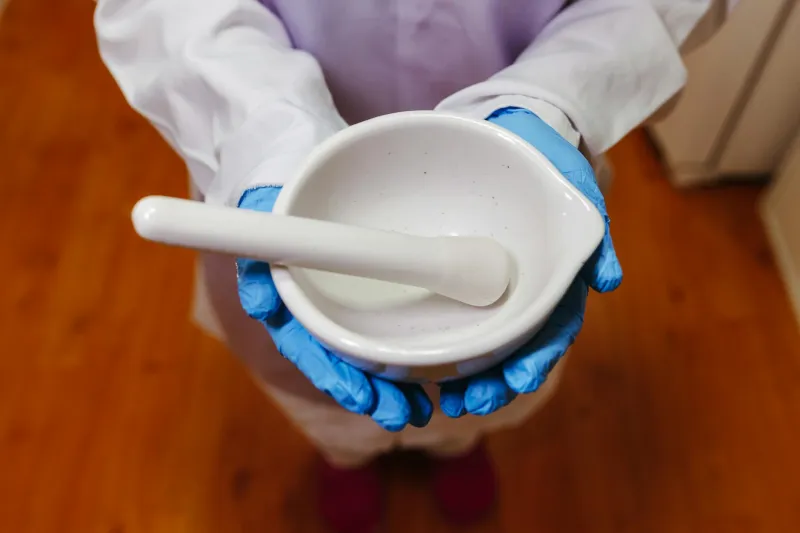
The Mortar and Pestle Behind the Counter
Walk into any CVS or Walgreens today, and you'll find rows of identical pill bottles, each containing precisely manufactured tablets that rolled off assembly lines thousands of miles away. But step back seventy years, and that same corner would have housed something entirely different: a pharmacy where your druggist knew not just your name, but your grandmother's arthritis remedy and exactly how you liked your cough syrup flavored.
In the early 20th century, the neighborhood pharmacist was part chemist, part confidant, and part craftsman. Behind that familiar counter sat scales, mortars, pestles, and rows of glass jars filled with raw powders and tinctures. When Dr. Henderson prescribed something for your bronchitis, the pharmacist didn't simply count out pre-made pills. He measured, mixed, and ground your medicine by hand, creating a unique preparation tailored specifically for you.
The Art of Individual Medicine
This wasn't just about mixing ingredients—it was about knowing people. Mrs. Johnson couldn't swallow large pills, so her heart medication came as a fine powder mixed with honey. Little Tommy hated the taste of his ear infection drops, so they got a touch of peppermint oil. The pharmacist remembered that Mr. Peterson's stomach couldn't handle certain binding agents, so his arthritis pills used rice starch instead of corn.
Every prescription was a small act of personalization. Pharmacists spent years learning not just chemistry, but the preferences and peculiarities of their customers. They knew who needed child-proof caps before anyone thought to regulate them, and who required extra-large print on labels decades before accessibility became a buzzword.
The relationship extended beyond the counter. Pharmacists made house calls for elderly patients who couldn't travel. They offered credit during tough times and often served as informal medical advisors when doctors were scarce or expensive. In small towns, the pharmacist was frequently the most educated person around, someone who understood both science and human nature.
When Everything Changed
The transformation began in the 1940s and accelerated through the 1960s. Pharmaceutical companies discovered they could manufacture drugs more efficiently in massive factories, creating standardized dosages that promised consistency and lower costs. The FDA started requiring extensive testing and approval processes that favored large-scale production over individual compounding.
Suddenly, the personal touch that had defined pharmacy for generations became not just unnecessary, but sometimes illegal. Regulations designed to ensure safety began requiring that most medications come pre-made from approved facilities. The mortar and pestle gave way to counting trays and computer screens.
Chain pharmacies emerged, offering convenience and competitive pricing that small, independent shops couldn't match. Why wait for your pharmacist to compound a custom preparation when you could grab the same medication off the shelf at three different locations across town?
What We Gained and Lost
The benefits of mass-produced pharmaceuticals are undeniable. Standardized manufacturing means consistent dosages, rigorous quality control, and medications that work the same way whether you're in New York or Nebraska. Costs dropped dramatically—a bottle of aspirin that once required individual preparation now costs less than a cup of coffee.
Safety improved too. Factory-made drugs undergo extensive testing and must meet strict purity standards. The risk of contamination or dosing errors that sometimes plagued hand-compounded medications largely disappeared.
But something intangible vanished along with those mortars and pestles. The pharmacist who once knew your medical history, your family's health patterns, and your personal preferences became a technician dispensing pre-packaged products. The relationship that had been built on trust and personal knowledge transformed into a transaction.
The Quiet Renaissance
Interestingly, compounding pharmacies never completely disappeared. They survived in specialized niches, serving patients with unusual allergies, children who needed liquid versions of adult medications, or people requiring dosages that didn't exist in mass-produced form.
Today, there's a small but growing movement back toward personalized medicine. Some pharmacists are rediscovering the art of compounding, while others use modern technology to customize medications in ways their predecessors never could. Pharmacogenomics—using genetic testing to determine how individuals process different drugs—represents a high-tech return to the old ideal of personalized treatment.
More Than Just Medicine
The story of America's pharmacies reflects broader changes in how we think about expertise, relationships, and convenience. We traded the craftsman who knew our names for the efficiency of mass production. We exchanged personal service for 24-hour availability and insurance coverage.
These weren't necessarily wrong choices. Modern pharmaceuticals have saved millions of lives and made healthcare more accessible than ever before. But in our rush toward efficiency and standardization, we lost something that's harder to quantify: the comfort of being known, the security of personal care, and the reassurance that came from watching someone carefully prepare your medicine just for you.
The next time you pick up a prescription, imagine for a moment what it would have been like to watch your pharmacist measure and mix that medication by hand, knowing it was made specifically for you by someone who remembered your name.