When Summer Afternoons Moved at the Speed of Music
The Sound That Stopped Time
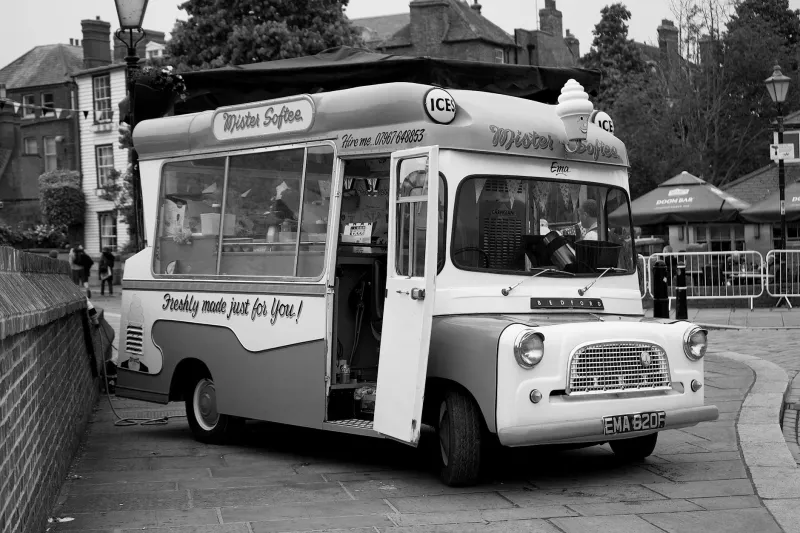
Every kid in 1978 knew the hierarchy of summer sounds. Screen doors slamming meant someone was going outside to play. The neighbor's lawn mower meant Saturday morning had officially started. But that distant, tinkling melody of "Turkey in the Straw" meant something magical was approaching—and you had maybe three minutes to find fifty cents and make it to the curb before paradise rolled past your house.
The ice cream truck wasn't just a vendor. It was a master class in desire, scarcity, and timing that shaped how an entire generation understood anticipation.
The Geography of Longing
Mr. Softee's route through Maple Street followed laws as predictable as gravity. Tuesday around 2 PM, he'd turn onto Oak from the north end. By 2:15, you could hear him approaching Pine Street. If you lived on Elm—the last stop before he headed to the next neighborhood—you learned patience the hard way.
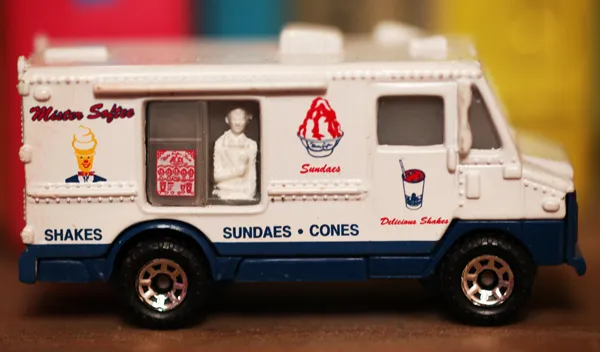 Photo: Mr. Softee, via 4.bp.blogspot.com
Kids developed sophisticated intelligence networks. Jenny's older brother could spot the truck four blocks away from his bedroom window. The Petersons' house sat on the corner where drivers always slowed down, giving their kids a crucial thirty-second advantage. Everyone knew that Mrs. Chen would send her daughter running to alert the whole block when she heard the music starting.
This wasn't just about ice cream. It was about learning that good things operated on their own schedule, not yours.
The Economics of Maybe
The ice cream truck economy ran on uncertainty. You never knew exactly when it would arrive, which meant you couldn't plan. Would you still have your allowance when the truck came? Had you already spent your quarters on baseball cards? Was today the day you'd finally have enough for the expensive ice cream sandwich with the cartoon character wrapper?
Kids learned to live in a constant state of preparedness. Smart ones stashed coins in secret hiding spots. Others negotiated complex lending arrangements with siblings. The really strategic ones cultivated relationships with generous neighbors who might be willing to sponsor a Rocket Pop in exchange for help carrying groceries.
Every transaction felt significant because opportunities were limited. Miss the truck today, and you might wait until tomorrow—or longer, if the driver changed his route or took a vacation.
The Ritual of the Chase
When that familiar melody finally reached your street, everything else stopped. Board games abandoned mid-turn. Bicycle races halted. Kids emerged from houses like prairie dogs, scanning for the source of the sound.
Then came the sprint. Not just running to catch the truck, but racing against every other kid in the neighborhood for position in line. The ice cream truck created temporary communities of sweaty, excited children united by shared urgency and desire.
Standing in that line, clutching warm coins, studying the pictures of treats taped to the truck's side—that was anticipation in its purest form. You had time to change your mind, to debate whether the character-shaped ice cream was worth the extra quarter, to wonder if the driver would run out of your favorite flavor before your turn.
When Scarcity Created Magic
The ice cream truck operated on principles that seem almost alien today: limited inventory, unpredictable timing, and no guarantee of satisfaction. Sometimes the driver ran out of Bomb Pops. Sometimes he skipped your street entirely. Sometimes you heard the music but couldn't find your money fast enough.
Those disappointments weren't system failures—they were features. They made success sweeter and taught kids that not every desire could be immediately satisfied. The possibility of missing out created a particular intensity of wanting that made getting your favorite ice cream feel like a genuine victory.
The Death of Summer Patience
Today's children live in a fundamentally different relationship with desire. Want ice cream? The freezer's full of options. Craving something specific? Order it online for delivery within hours. Feeling impatient? Stream a movie, play a game, scroll through infinite entertainment options.
The on-demand economy has largely eliminated the experience of wanting something and having to wait for it—really wait, without alternatives or substitutes or workarounds.
Modern convenience stores stay open 24/7. Grocery stores stock dozens of ice cream brands year-round. Food delivery apps bring restaurant-quality desserts to your door in thirty minutes. The idea of organizing your afternoon around the possibility that a treat might drive by seems quaint, almost primitive.
What We Gained and Lost
The benefits of our current system are obvious. No child goes without ice cream because the truck didn't come. Parents don't have to keep emergency quarters scattered around the house. Families can plan treats around their schedules instead of surrendering to the arbitrary timing of a vendor's route.
But something subtle disappeared when scarcity vanished: the particular joy that comes from getting something you weren't sure you'd get. The ice cream truck didn't just sell frozen treats—it sold the experience of successful anticipation.
The Rhythm of Seasonal Desire
The ice cream truck was part of summer's larger rhythm. Like fireflies and swimming pools and staying up past your bedtime, it marked time in ways that had nothing to do with calendars. You knew summer was really starting when you heard that first distant melody. You knew it was ending when the truck stopped coming around.
That seasonal predictability created its own kind of anticipation. All winter, you'd forget about the ice cream truck. Then one warm April afternoon, you'd hear those familiar notes drifting through your neighborhood, and summer would officially begin.
Learning to Live with Longing
Perhaps the ice cream truck's greatest gift was teaching children how to live comfortably with unfulfilled desire. Not every day brought ice cream. Not every craving could be immediately satisfied. Sometimes you had to wait, and sometimes waiting meant the thing you wanted never came.
This wasn't deprivation—it was education. Kids learned that anticipation could be its own form of pleasure. That wanting something made getting it more meaningful. That good things were worth waiting for, even when waiting meant you might not get them at all.
The Sound of Everything Available
Today's children grow up in a world where the question isn't whether they can have something, but which of many options they'll choose. The abundance is real and wonderful. But it's also created a generation that's never learned the particular satisfaction of patient desire finally fulfilled.
The ice cream truck's distant melody once taught American kids a fundamental truth: the best things in life come on their own schedule, not yours. In losing that lesson, we've gained convenience but lost something harder to replace—the deep contentment that comes from wanting something, waiting for it, and finally hearing the sound of it rolling up your street.