The Weekend Wasn't Always Yours — The Hard-Won Battle That Gave Americans Saturday and Sunday Off
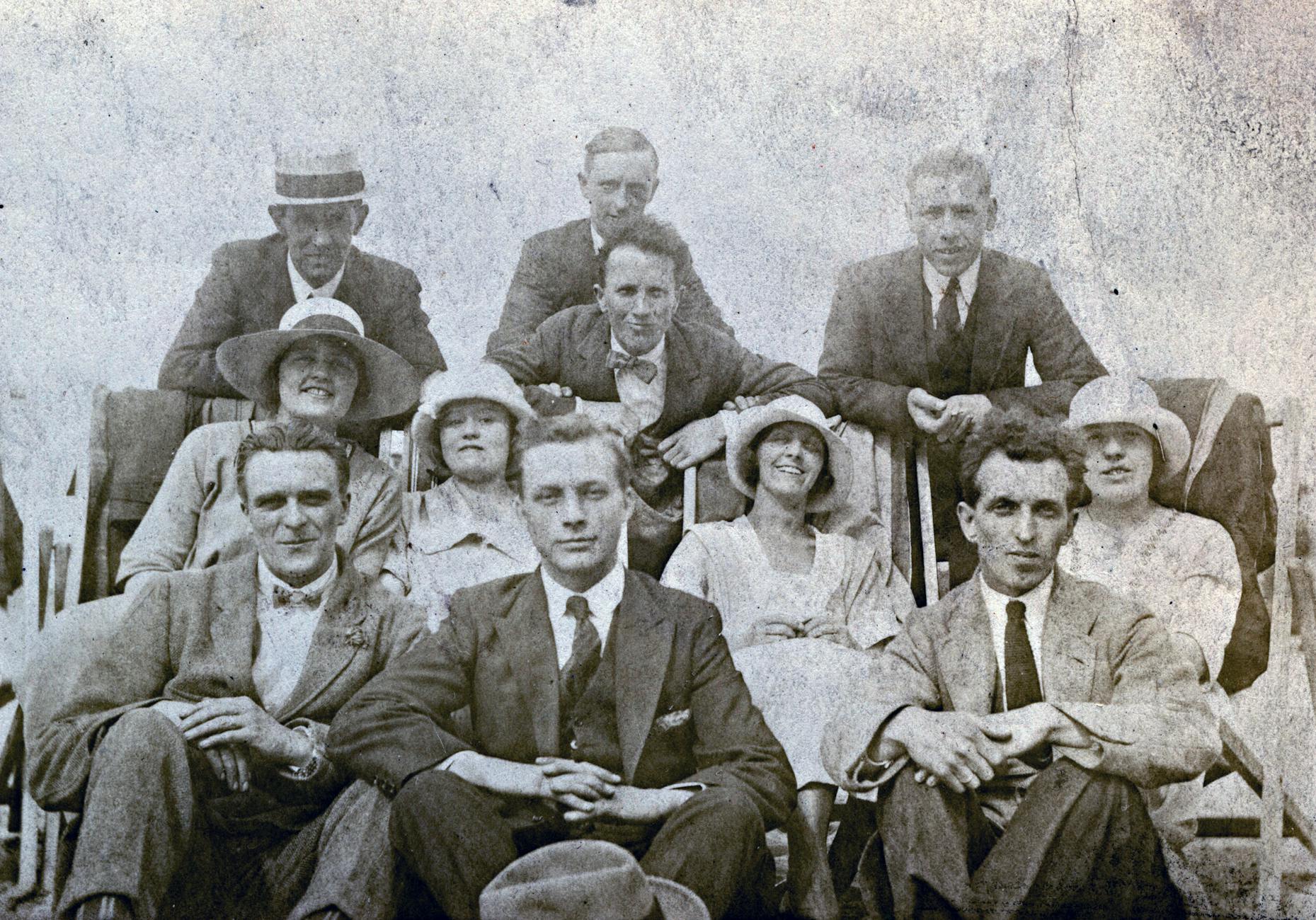
The Weekend Wasn't Always Yours — The Hard-Won Battle That Gave Americans Saturday and Sunday Off
When Friday afternoon rolls around and you start mentally checking out, it's worth pausing to consider something: the weekend you're looking forward to is not a natural feature of human civilization. It was invented. Specifically, it was invented in America, over the course of several hard, contentious decades, by workers and organizers who were told repeatedly that what they were asking for was unreasonable.
The 40-hour workweek and the two-day weekend are so embedded in American life that they feel ancient and inevitable. They are neither.
What Work Actually Looked Like Before
In the decades following the Civil War, as American industry expanded at a ferocious pace, the working conditions for most laborers were simply brutal by any modern standard.
A typical factory worker in the 1880s worked six days a week, often ten to twelve hours a day. That's somewhere between 60 and 72 hours weekly — with Sunday as the only guaranteed day off, and even that wasn't universal. Steel mills, textile factories, and coal mines frequently ran around the clock, with workers cycling through shifts that left little time for anything beyond eating and sleeping.
Children worked alongside adults. It was unremarkable. A ten-year-old operating machinery in a textile mill or hauling coal in a mine was not a scandal — it was an economic reality that many families depended on. The concept of childhood as a protected period of education and development was, in many working-class communities, a luxury that simply didn't apply.
There were no federal minimum wage laws, no mandatory breaks, no occupational safety standards worth mentioning. If you were injured on the job, that was generally your problem. If you complained too loudly, you could be replaced by tomorrow morning.
The Long Fight Back
Labor organizers had been pushing for shorter hours since the mid-1800s, with the rallying cry "Eight hours for work, eight hours for rest, eight hours for what we will" becoming a touchstone of the movement. But progress was slow and frequently violent.
Strikes were broken by private security forces and, when that failed, by the National Guard. Organizers were fired, blacklisted, and sometimes arrested. The idea that a worker had a right to limit the hours of their labor was genuinely controversial — not just among industrialists, but in mainstream political discourse.
The first major federal breakthrough came with the Fair Labor Standards Act of 1938, which established the 40-hour workweek and overtime pay requirements for most American workers. It was a landmark moment — but it didn't emerge from nowhere.
Henry Ford's Surprising Role
One of the more counterintuitive figures in this story is Henry Ford.
In 1926, Ford Motor Company voluntarily shifted to a five-day, 40-hour workweek — a decision that shocked the business world. Ford wasn't doing it out of generosity. He had a calculated theory: workers who had leisure time would spend money on leisure. They'd buy cars. They'd go on trips. They'd become consumers as well as producers.
"It is high time to rid ourselves of the notion that leisure for workmen is either lost time or a class privilege," Ford said at the time. Coming from one of America's most powerful industrialists, it was a remarkable statement — and it gave the labor movement an unexpected ally, at least on the hours question.
Ford's experiment worked, both economically and as a proof of concept. Productivity at his plants didn't collapse. Workers weren't squandering their extra time. The sky, it turned out, didn't fall when people got Saturday off.
The New Deal Seals It
The Fair Labor Standards Act, passed under Franklin D. Roosevelt, made what Ford had done voluntarily into a legal standard for most American workers. The 40-hour threshold wasn't just a labor concession — it was framed as an economic tool, a way to spread available work across more workers during the depths of the Great Depression.
For the first time, the federal government was saying explicitly: there is a limit to how many hours an employer can demand from a worker before paying a premium. Time has value. Your time has value.
It was a philosophical shift as much as a legal one.
The Echoes We're Still Hearing
Here's what makes this history feel immediately relevant: the same arguments being made in the 1890s are being made again today, just with updated vocabulary.
The push for a four-day workweek — currently being piloted by companies across the country and studied by researchers worldwide — is drawing the same mix of enthusiasm from workers and skepticism from employers that the 40-hour week once did. Proponents say productivity doesn't suffer. Critics say it's impractical. Pilot programs keep showing that, mostly, it works.
The rise of remote work has scrambled the old boundaries further. When your office is your kitchen table and your boss can reach you on Slack at 9 p.m., the clean line between work time and personal time that the 40-hour week was supposed to protect starts to blur in new ways.
And the gig economy has quietly recreated, for a significant slice of American workers, something uncomfortably close to the pre-regulation era — piece-rate pay, no guaranteed hours, no overtime protections, no employer-provided benefits.
A Hard-Won Thing Worth Remembering
The 40-hour workweek isn't a natural law. It's a social agreement, hammered out over decades by people who sacrificed a great deal to establish it. The weekend you take for granted was, for earlier generations of American workers, a radical demand.
That context doesn't make current debates simpler. But it does make them clearer. We've been here before — arguing about how much of a person's life their job is entitled to claim. We figured out an answer once. We're still figuring it out now.