The Sweet Spot Where America Gathered — When Drugstore Soda Fountains Were the Heart of Every Neighborhood
The Fizz That Built Communities
Walk into any CVS or Walgreens today, and you'll find fluorescent aisles of packaged goods, self-checkout stations, and maybe a pharmacy counter staffed by someone you've never met. But for the better part of a century, America's corner drugstores looked nothing like this sterile retail experience. They were anchored by something that seems almost mythical now: the soda fountain.
These weren't just places to grab a quick drink. They were the social media platforms of their day, the coffee shops, the community centers, and the teenage hangouts all rolled into one marble-topped counter where a skilled "soda jerk" could craft dozens of different fizzy concoctions from memory.
More Than Just a Drink
The drugstore soda fountain emerged in the 1870s when pharmacists began mixing carbonated water with flavored syrups as a way to make medicine more palatable. But what started as a practical solution quickly became something far more significant: America's first truly democratic social space.
Unlike saloons, which excluded women and children, or restaurants, which often enforced strict social hierarchies, the soda fountain welcomed everyone. A businessman could sit next to a factory worker, both enjoying the same hand-mixed cherry phosphate. Teenagers could claim their independence with a nickel Coca-Cola while still under the watchful eye of the neighborhood pharmacist who knew their parents.
The menu itself tells the story of a more patient America. Egg creams — which contained neither eggs nor cream — required the precise timing of chocolate syrup, milk, and seltzer. A proper ice cream soda demanded the right ratio of syrup to carbonated water, topped with a perfect scoop that wouldn't immediately melt. These weren't drinks you could mass-produce or grab on the run. They required skill, time, and conversation.
The Theater of the Soda Jerk
Behind every fountain stood the soda jerk — a title that came from the jerking motion required to operate the soda dispensers. These weren't just service workers; they were performers, memory champions, and neighborhood fixtures all at once.
A good soda jerk knew not just how to make a hundred different drinks, but how to remember that Mrs. Johnson liked her cherry Coke with extra ice, that Tommy always ordered a chocolate malt after baseball practice, and that the high school couples preferred the corner booth on Friday nights.
The physical act of making these drinks created natural conversation. Unlike today's drive-through interactions that last thirty seconds, ordering a phosphate or an ice cream sundae meant watching it being made, chatting with the person making it, and often striking up conversations with whoever happened to be sitting nearby.
Where Generations Mixed
Perhaps most remarkably, soda fountains created spaces where different age groups naturally interacted. Grandparents brought grandchildren for Saturday afternoon treats. High schoolers saved up allowances for after-school sodas. Middle-aged customers grabbed quick lunches at the same counter where teenagers were planning their evening plans.
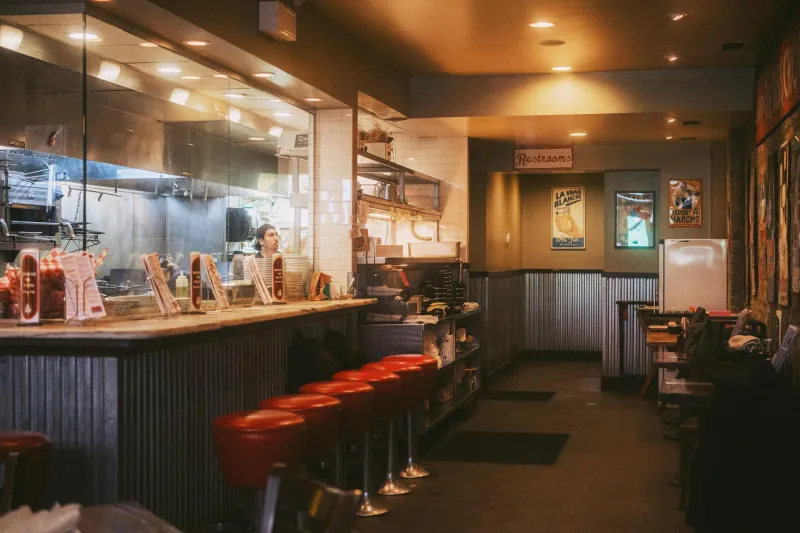
This wasn't forced intergenerational programming — it was organic community building that happened because the space itself encouraged it. The long counters, the swiveling stools, the shared experience of waiting for your drink to be made: everything about the design promoted interaction rather than isolation.
The Economics of Patience
Soda fountains also operated on a completely different economic model than today's fast food. Customers weren't encouraged to eat quickly and leave. Quite the opposite — the longer you stayed, the more likely you were to order another drink, strike up a conversation that led to future visits, or recommend the place to friends.
Drugstore owners understood that the fountain wasn't just about beverage sales. It was about creating loyal customers who would also buy their prescriptions, toiletries, and sundries from the same trusted neighborhood source. The soda fountain was loss leader that built relationships.
What Replaced the Ritual
The decline of soda fountains wasn't sudden. It was a slow erosion that paralleled broader changes in American life. Suburban shopping centers moved retail away from walkable neighborhoods. Fast food chains offered speed over craftsmanship. Supermarkets provided one-stop shopping that eliminated the need for multiple neighborhood stops.
By the 1970s, most drugstore soda fountains had been replaced by pre-packaged snacks and refrigerated soft drinks. The skilled soda jerks found work elsewhere. The marble counters were torn out to make room for more profitable merchandise.
What we gained was convenience and efficiency. What we lost was harder to measure: the daily practice of casual conversation across generations, the art of taking time over simple pleasures, and the kind of neighborhood institution that made every community feel a little more connected.
The Sweet Spot We're Still Looking For
Today, we try to recreate some of what soda fountains provided through coffee shops, community centers, and social media. But none quite capture the democratic accessibility and intergenerational mixing that happened naturally when America's corner drugstore was anchored by a fountain that turned every drink order into a small social occasion.
The next time you grab a bottled soda from a convenience store cooler, imagine instead sitting at a marble counter, watching someone hand-mix your drink while you chat with neighbors about everything and nothing. That's not just nostalgia — that's a reminder of how different community building used to look when it happened one perfectly crafted phosphate at a time.