The Doctor Who Knew Your Name — And Came to Your Door
The Doctor Who Knew Your Name — And Came to Your Door
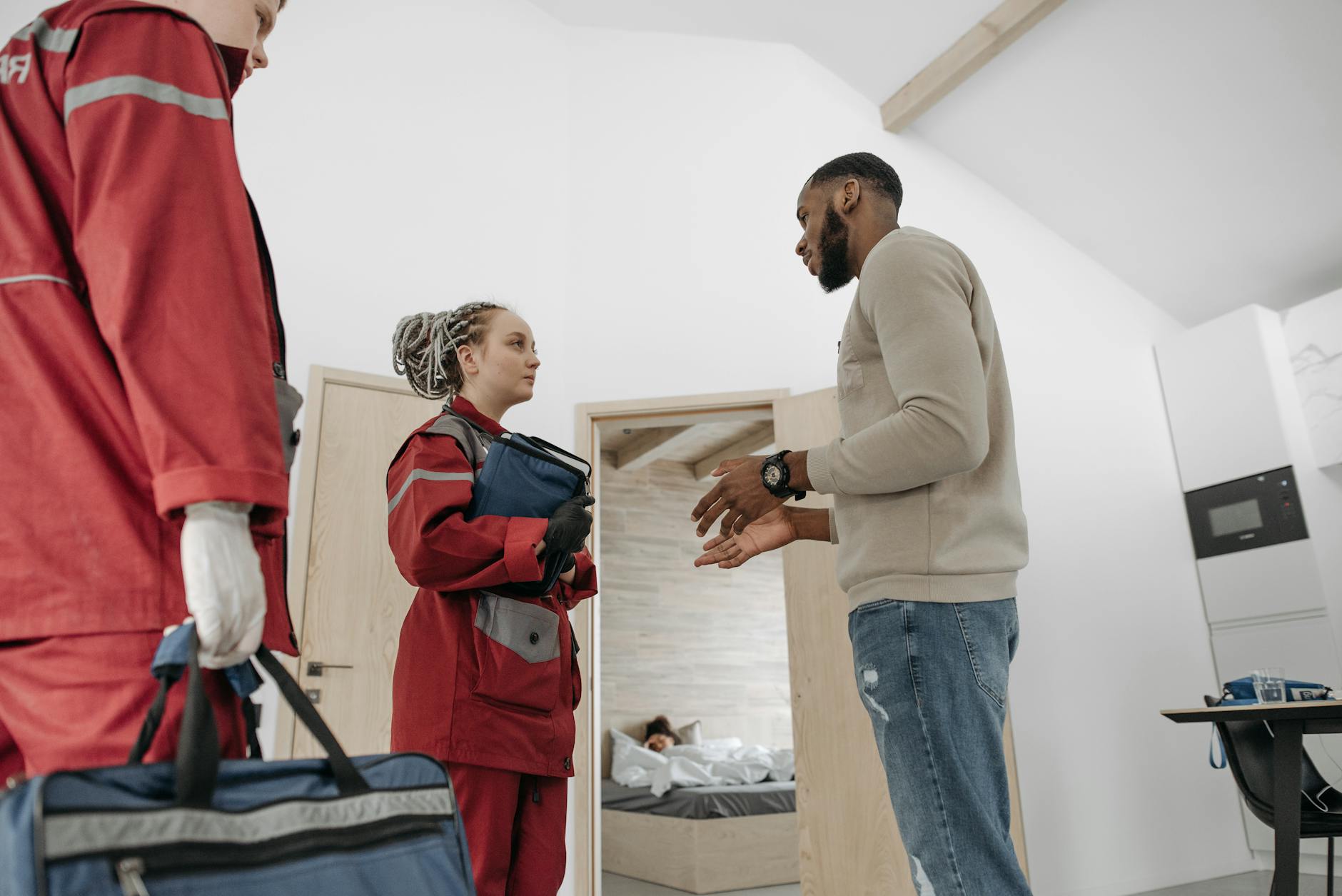
Picture this: you wake up with a fever, call your doctor, and a few hours later he's sitting at your kitchen table, black bag open, asking how long you've felt this way. He knows you've had a bad back since your car accident in 1946. He asks about your mother, who he also treats. He writes a prescription, tells you to rest, and charges you a few dollars on his way out the door.
This wasn't a scene from a TV drama. For millions of Americans in the early-to-mid twentieth century, this was just... medicine. Ordinary, neighborhood-based, personal medicine.
Somewhere between then and now, that version of healthcare largely disappeared. What replaced it is a system that's more technically capable than anything those house-call doctors could have imagined — and, in many ways, far more difficult to actually navigate.
Medicine as a Neighborhood Institution
In the early 1900s, the American doctor occupied a very specific place in community life. He — and it was almost always a he — typically ran a solo practice out of an office attached to his home or a small storefront nearby. He had a personal relationship with the families on his block, knew their histories without consulting a chart, and made house calls as a routine part of his work.
According to historical records, house calls accounted for roughly 40 percent of physician-patient interactions in the 1930s and 40s. Doctors carried their tools in compact black bags: a stethoscope, thermometer, blood pressure cuff, and a limited but functional pharmacy of medications. They couldn't do what a modern hospital can do — but for the everyday ailments that most people faced, they didn't need to.
Fees were charged directly, often negotiated informally, and frequently adjusted based on what a family could afford. Barter wasn't unheard of in rural areas. The relationship between patient and doctor was direct, unmediated, and often lifelong. Your doctor might deliver your children and attend your parents' final illnesses. That continuity created a kind of medical intimacy that's almost impossible to describe to someone who's grown up scheduling appointments through a portal.
The Institutional Shift
The transformation didn't happen all at once, but the postwar decades were a turning point. Hospitals, which had historically been places people went to die rather than to recover, were radically upgraded by mid-century advances in surgery, antibiotics, and diagnostics. Medicine became more complex — and more capital-intensive. The solo practitioner with a black bag couldn't offer what a fully equipped hospital floor could.
At the same time, employer-sponsored health insurance became widespread after World War II, partly as a result of wage controls that pushed companies to compete on benefits instead of salary. Health coverage became tied to employment — a linkage that shapes the American system to this day and has no real equivalent in most other developed countries.
By the 1960s and 70s, the house call was already fading. It was time-consuming, inefficient by the emerging logic of modern medicine, and increasingly unnecessary as more patients had access to cars and could come to a clinic. The economics of medicine shifted toward volume: see more patients, bill more procedures, run more tests. A doctor who spent an hour at a patient's bedside was a doctor who wasn't seeing the next three appointments.
Pharmaceutical companies grew into major economic forces. Hospital systems consolidated. Insurance bureaucracy expanded into every corner of the patient-doctor interaction. By the end of the twentieth century, the neighborhood doctor who knew your family was largely a memory.
The 15-Minute Appointment
Today, the average primary care visit in the United States lasts somewhere between 15 and 20 minutes. Studies have found that physicians are interrupted or redirect the conversation within about 11 seconds of a patient beginning to describe their symptoms. Doctors spend nearly half their working hours on administrative tasks — entering data into electronic health records, managing insurance pre-authorizations, navigating billing codes.
Patient-doctor continuity, once the bedrock of medical care, has become something of a luxury. Many Americans see different providers at each visit, especially those using urgent care clinics or large health systems where availability matters more than familiarity. The idea that your doctor knows your history, your family, your habits — that's no longer a baseline expectation. It's something you have to specifically seek out, often at higher cost.
The financial structure has also grown extraordinarily complex. A patient today might interact with their primary care physician, a specialist, an insurance company, a pharmacy benefits manager, a hospital billing department, and a third-party lab — all for a single health episode. The direct, cash-based simplicity of the early 20th century doctor's fee has been replaced by a system that employs entire industries just to administer itself.
What Modern Medicine Actually Got Right
None of this is a straightforward argument for the old ways. The early 20th century doctor, for all his personal warmth, was working with radically limited tools. Infections that are trivially treated today were death sentences. Cancer diagnoses were often made too late to matter. Surgical outcomes were far grimmer. The intimacy of the house call came bundled with genuine medical limitation.
Modern medicine saves lives in ways that would have seemed miraculous to that doctor with his black bag. Organ transplants, targeted cancer therapies, minimally invasive surgery, drugs that manage chronic conditions that once killed people in middle age — the technical progress is staggering and real.
But technical capability and human experience aren't the same thing. And the human experience of American healthcare — the confusion, the cost, the feeling of being processed rather than cared for — is a genuine problem that the system's advocates don't always grapple with honestly.
A Different Kind of Care
Some of what was lost is coming back in new forms. Concierge medicine practices offer longer appointments and direct physician access — for a monthly fee that puts them out of reach for most Americans. Telehealth has reintroduced a version of the house call, at least conversationally. Some community health centers are working hard to restore continuity and personal connection within the constraints of modern reimbursement structures.
But the underlying tension remains. American healthcare is extraordinarily good at treating acute, complex illness. It is considerably less good at the slow, attentive, relationship-based work that kept people healthy in the first place — the kind of work that used to happen at a kitchen table, with a doctor who already knew how you took your coffee.