The Wardrobe That Outlasted Marriages — When Americans Bought Clothes to Keep Forever
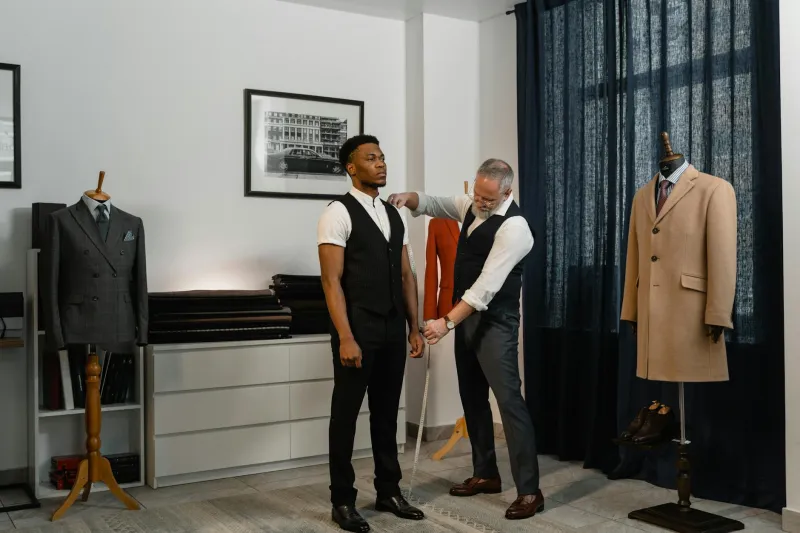
The Suit That Knew Your Body
Walk into any department store today, and you'll find racks of identically sized clothing designed to fit everyone and no one particularly well. Size "Medium" means roughly the same thing whether you're shopping at Target or Nordstrom, and most of us have accepted the reality of clothes that almost fit, with sleeves that are slightly too long or waists that gap in the back.
But step back seventy years, and the relationship between Americans and their clothing was fundamentally different. For most middle-class families, buying clothes meant visiting a tailor or seamstress who would measure, cut, and construct garments specifically for your body. The idea of buying something off the rack and hoping it would fit was not just uncommon — it was considered settling for less.
Your neighborhood tailor knew that your left shoulder sat slightly higher than your right, that you preferred your trouser break to fall just so, and that your wife liked her dresses fitted through the waist but with room to move comfortably. These weren't luxury services — they were simply how Americans bought clothes.
The Economics of Forever
The mathematics of mid-century clothing consumption would seem impossible today. A working man might own three suits total: one for everyday work, one for church and special occasions, and perhaps one older suit for weekend projects. A woman might have a similar number of dresses, along with a few carefully chosen skirts and blouses that could be mixed and matched.
This wasn't poverty — it was strategy. When a suit cost the equivalent of two weeks' wages but was expected to last fifteen to twenty years, buying clothes became a serious investment decision. Families planned wardrobe purchases like they planned major appliances, researching quality, comparing craftsmen, and choosing pieces that would serve multiple purposes for decades.
The cost per wear was remarkably low. A $200 suit in 1950 (roughly $2,400 today) worn twice a week for fifteen years worked out to about 15 cents per wearing. Compare that to a modern $150 suit that might last two years of regular wear, and the old economics start making sense.
This approach required a different relationship with fashion itself. Instead of following seasonal trends, people invested in classic styles that would look appropriate for years or decades. The goal wasn't to look fashionable — it was to look well-dressed, properly fitted, and respectable.
The Craft Behind the Cloth
Custom clothing required an ecosystem of skilled craftspeople that has largely disappeared from American communities. Every neighborhood had at least one tailor and one seamstress, often more. These weren't high-end boutiques serving the wealthy — they were working-class businesses serving working-class customers.
The local tailor was part artist, part engineer, and part psychologist. Creating a well-fitted garment required not just technical skill, but an understanding of how people moved, worked, and lived in their clothes. A good tailor could look at a customer and immediately identify the adjustments needed to make a standard pattern work for their unique body.
Sewing was also a fundamental life skill. Most women could alter, repair, and even construct clothing for their families. Home economics classes taught girls not just how to cook and clean, but how to draft patterns, operate sewing machines, and maintain wardrobes. Boys learned basic mending skills and how to care for their clothes properly.
This knowledge created a culture of clothing maintenance that extended garment life dramatically. People routinely had clothes altered as their bodies changed, repaired when they wore out, and updated when styles shifted slightly. A well-made coat might serve three generations, with periodic alterations to keep it current and functional.
The Fabric of Community
The custom clothing industry created deep community connections that extended far beyond simple commerce. Your tailor often became a confidant, someone who literally knew you inside and out. They witnessed life changes — weight gain or loss, pregnancies, aging — and adapted your wardrobe accordingly.
These relationships often lasted decades. A tailor might dress a young man for his first job interview, his wedding, and eventually his son's graduation. They became repositories of family history, maintaining detailed records of measurements, preferences, and special occasions that required new clothes.
The fitting process itself was a ritual that has no modern equivalent. Multiple appointments were required: initial consultation and measurement, first fitting of the roughly constructed garment, second fitting for fine adjustments, and final delivery. Each step involved conversation, relationship building, and the gradual perfection of fit that made the final product truly personal.
Local fabric stores were community gathering places where women would examine new shipments, share sewing tips, and coordinate outfits for church or social events. The selection of fabric for a new dress or suit was a significant decision, discussed with friends and family members who understood that the choice would be lived with for years.
When Everything Changed
The transformation began in the 1960s as improved manufacturing techniques made ready-to-wear clothing increasingly attractive. Synthetic fabrics reduced costs and maintenance requirements. International trade agreements made imported clothing dramatically cheaper. And changing lifestyles made the idea of owning just a few, very durable pieces of clothing seem unnecessarily restrictive.
The rise of casual Friday, then casual everyday, reduced the demand for formal tailored clothing. Why invest in a custom suit when your office encouraged khakis and polo shirts? The social pressure to dress formally and formally well began to diminish just as alternatives became more available and affordable.
Women's liberation also played a role, as many women chose to spend their time on careers rather than maintaining elaborate wardrobes. The skills once passed down from mother to daughter — sewing, mending, altering — began to seem old-fashioned rather than practical.
By the 1980s, most neighborhood tailors and seamstresses had closed or shifted to serving only the wealthy. The middle-class custom clothing industry that had sustained American communities for generations largely disappeared within a single decade.
The Fast Fashion Revolution
What replaced custom clothing was something unimaginable to earlier generations: disposable fashion. Today, the average American purchases 68 items of clothing per year and discards roughly the same amount. Fast fashion retailers like H&M and Forever 21 have trained consumers to expect new styles every few weeks and prices so low that replacement is cheaper than repair.
This shift represents more than just economic change — it's a complete reversal in how we think about clothing and consumption. Instead of buying fewer, better things and maintaining them carefully, we buy many cheaper things and replace them frequently.
The environmental and social costs of this transformation are becoming increasingly apparent. The fashion industry now produces more carbon emissions than international flights and shipping combined. Textile waste has become a major environmental problem. And the working conditions in overseas garment factories would have been unthinkable when American tailors and seamstresses made clothes for their neighbors.
What We Gained and Lost
The shift away from custom clothing brought undeniable benefits. Shopping became faster and more convenient. Clothing became more affordable for most families. And the time once spent on clothing maintenance could be redirected to other activities.
But the losses were significant too. We lost the deep satisfaction of owning things made specifically for us. We lost the skills needed to maintain and repair our belongings. We lost the community connections that came from working closely with local craftspeople. And we lost the environmental benefits of consuming less but consuming better.
Perhaps most importantly, we lost the concept of clothing as investment rather than consumption. When clothes were expected to last for decades, quality mattered more than quantity. Fit mattered more than trends. Craftsmanship mattered more than convenience.
The Return of the Personal
Today, custom clothing is experiencing a small renaissance, but it's positioned as luxury rather than necessity. Online services offer custom-fitted shirts and suits, though they can't replicate the personal relationships that once defined the industry. Some young people are rediscovering sewing and tailoring skills, though more as hobbies than life skills.
A few independent tailors still serve customers who remember the old way of doing things, but they're increasingly rare and expensive. What once was normal — having your clothes made to fit your body — has become a luxury that most Americans consider unnecessary or unaffordable.
The question isn't whether we should return to the clothing practices of the 1950s — that world is gone. But perhaps we can learn from what made that system work: the emphasis on quality over quantity, the investment in craftsmanship, the expectation that things should be built to last, and the understanding that the cheapest option isn't always the best value.
In our current world of fast fashion and disposable trends, the idea of building a wardrobe to last a lifetime seems almost revolutionary. But for most of American history, it was simply common sense.